2 minute readNewAgent-ready
Pricing models that learn from your own request data
Buyer-aware pricing can now learn from the fields you send in metadata, nested objects and lists included. A feature contract names each field by its path in the request and says how it becomes a label; each quote keeps only those labels, never your raw metadata.
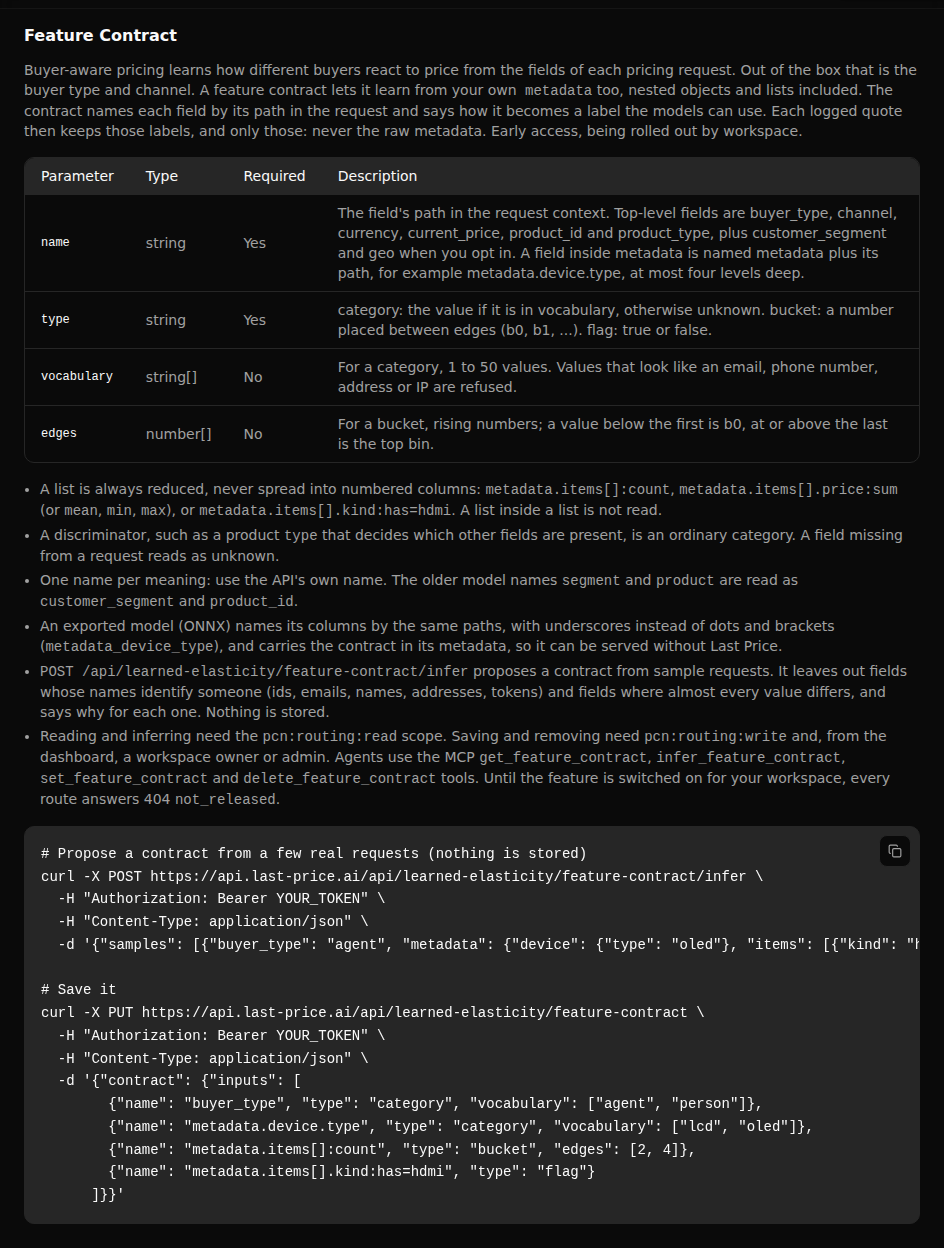
Buyer-aware pricing learned how different buyers react to price from a few flat fields, such as the buyer type and channel. Your requests often say much more than that, in metadata: the kind of device, the items in the basket, the plan. A feature contract lets the models learn from it.
- Named by path: each field is named by where it sits in the request, such as
metadata.device.type. One name per meaning, the API's own; the older model namessegmentandproductnow read ascustomer_segmentandproduct_id. - Lists reduced, not spread:
metadata.items[]:count,metadata.items[].price:sumormetadata.items[].kind:has=hdmi, neveritem_1,item_2columns. - Discriminators are categories: a
typefield that decides what else is present is learned like any other category. - Only labels are kept: a quote keeps the contract's labels (a known value, a numeric bin, or yes or no), never the metadata itself. Values that look personal are refused.
- Proposed for you:
infer_feature_contractreads sample requests and proposes a contract, leaving out fields that identify someone and saying why. - Portable models: an exported ONNX model names its columns by the same paths and carries the contract, so it can be served without Last Price.