Diagrams
How Last Price works, in pictures
The numbers in each picture come from the same rules the API runs. Use the images in a post, a newsletter or a slide; each one links to the docs section it explains.
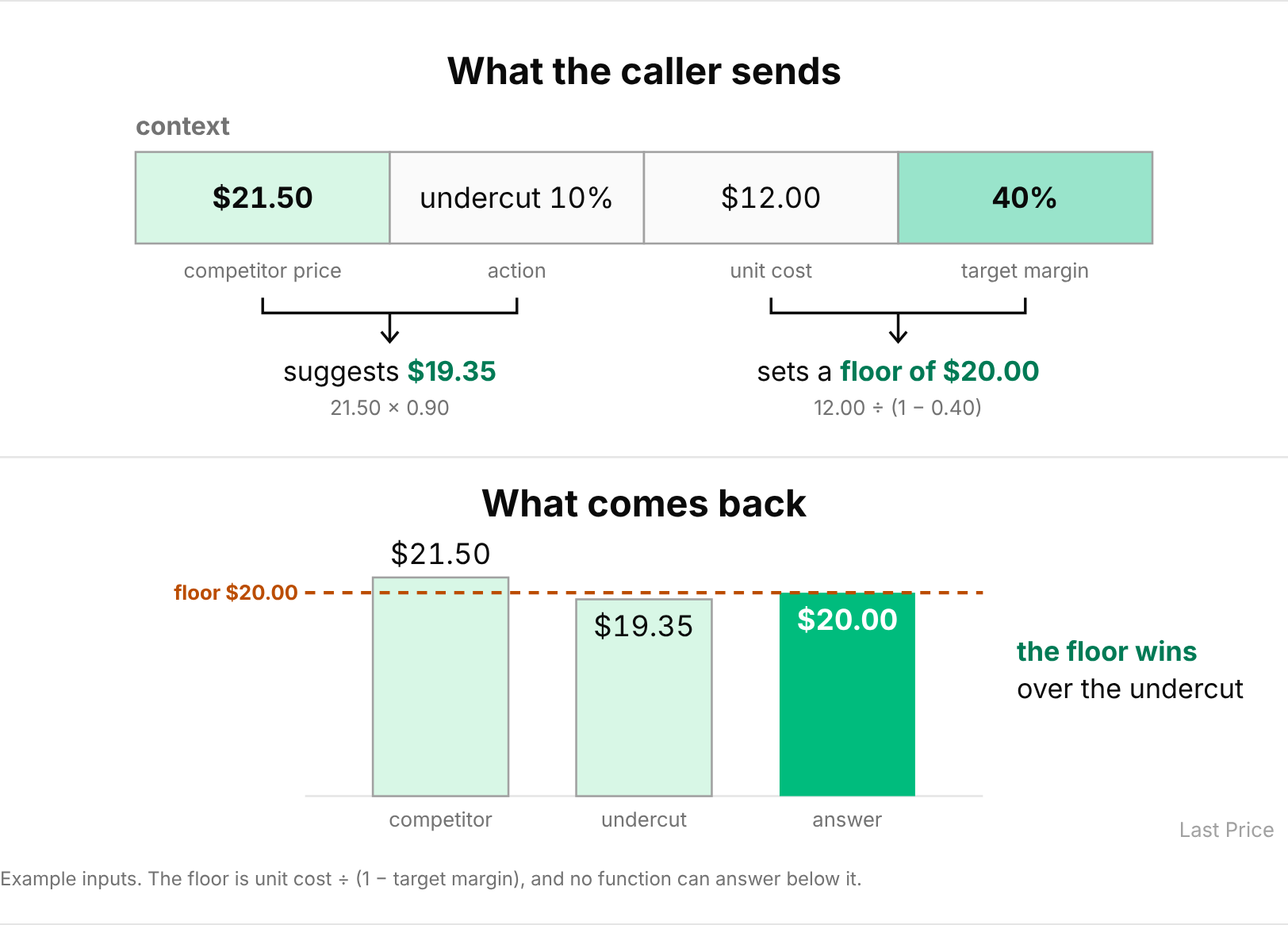
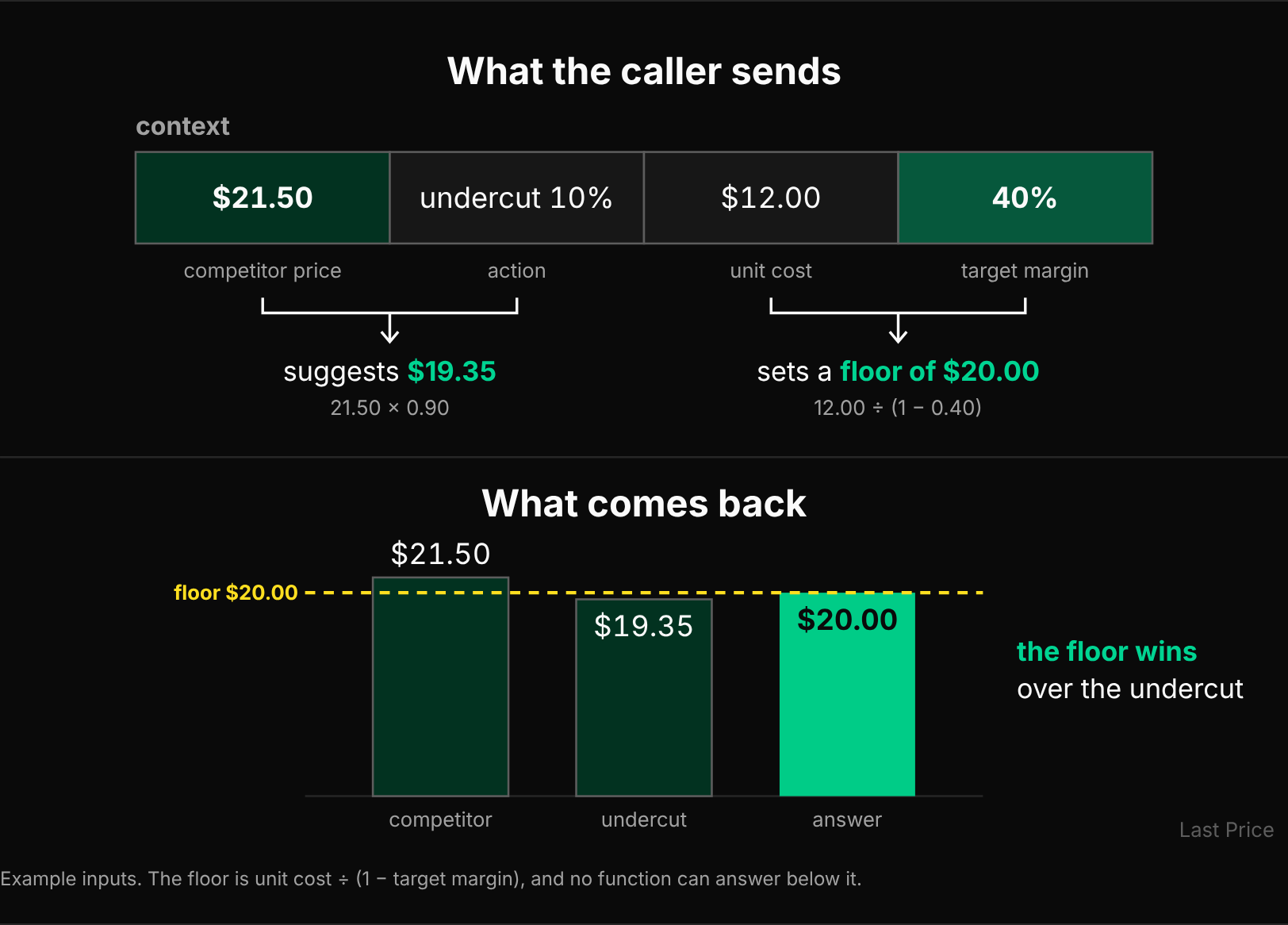
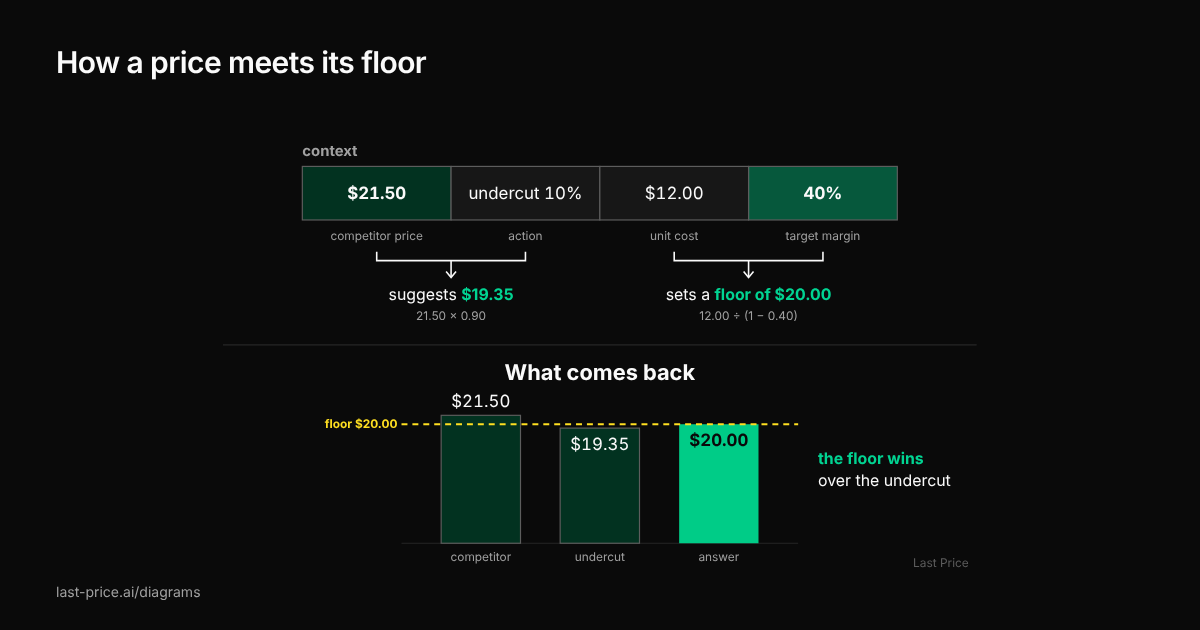
1.How a price meets its floor
Example inputs. The floor is unit cost ÷ (1 − target margin), and no function can answer below it. Try your own numbers. The picture is worked out again by the same rules.
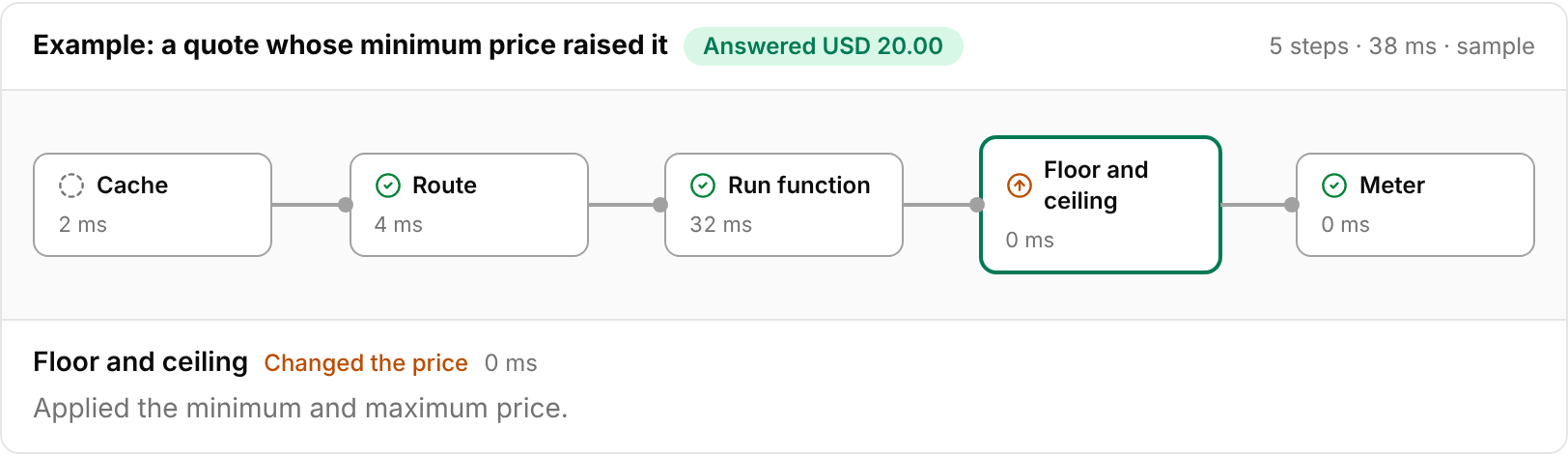
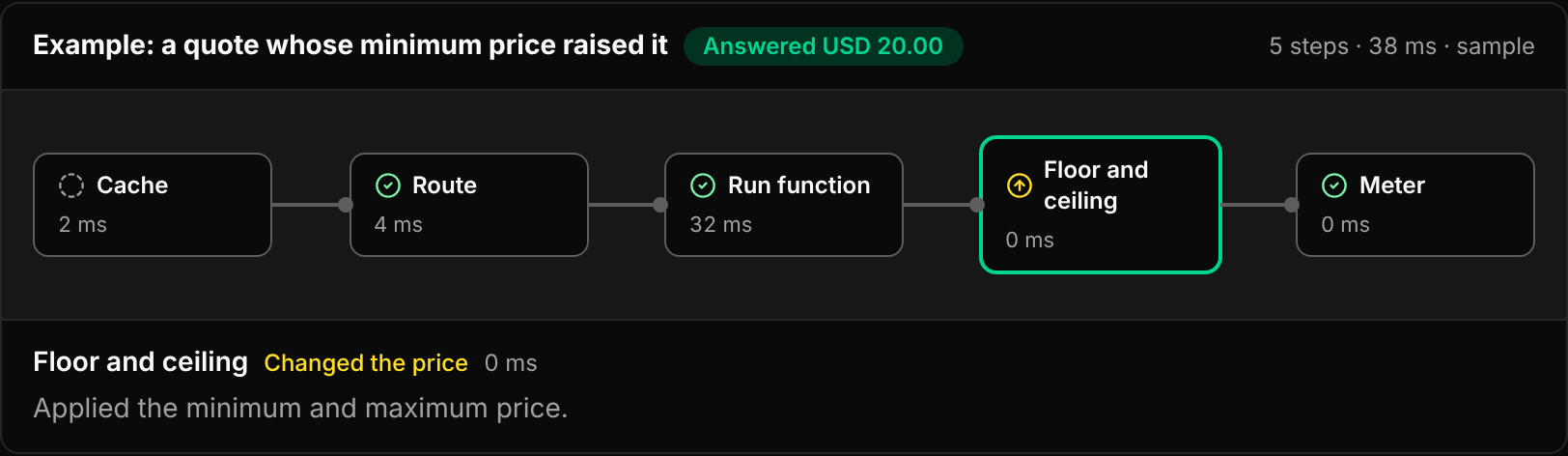
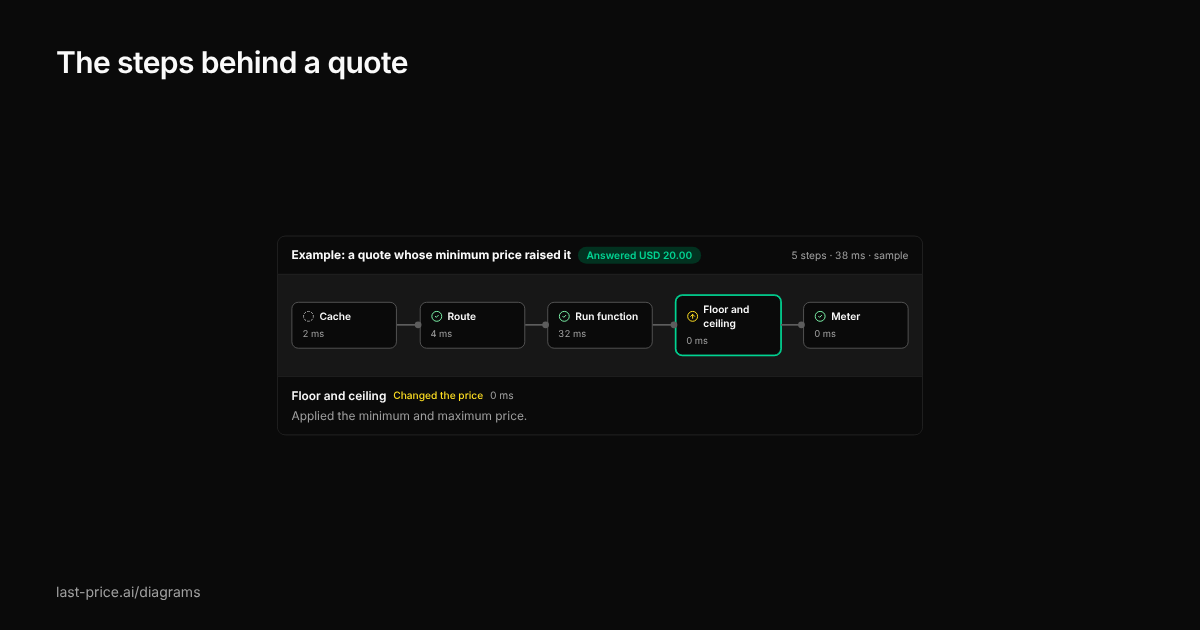
2.The steps behind a quote
Example: a quote whose minimum price raised itAnswered USD 20.005 steps · 38 ms · sampleFloor and ceilingChanged the price0 ms
Applied the minimum and maximum price.
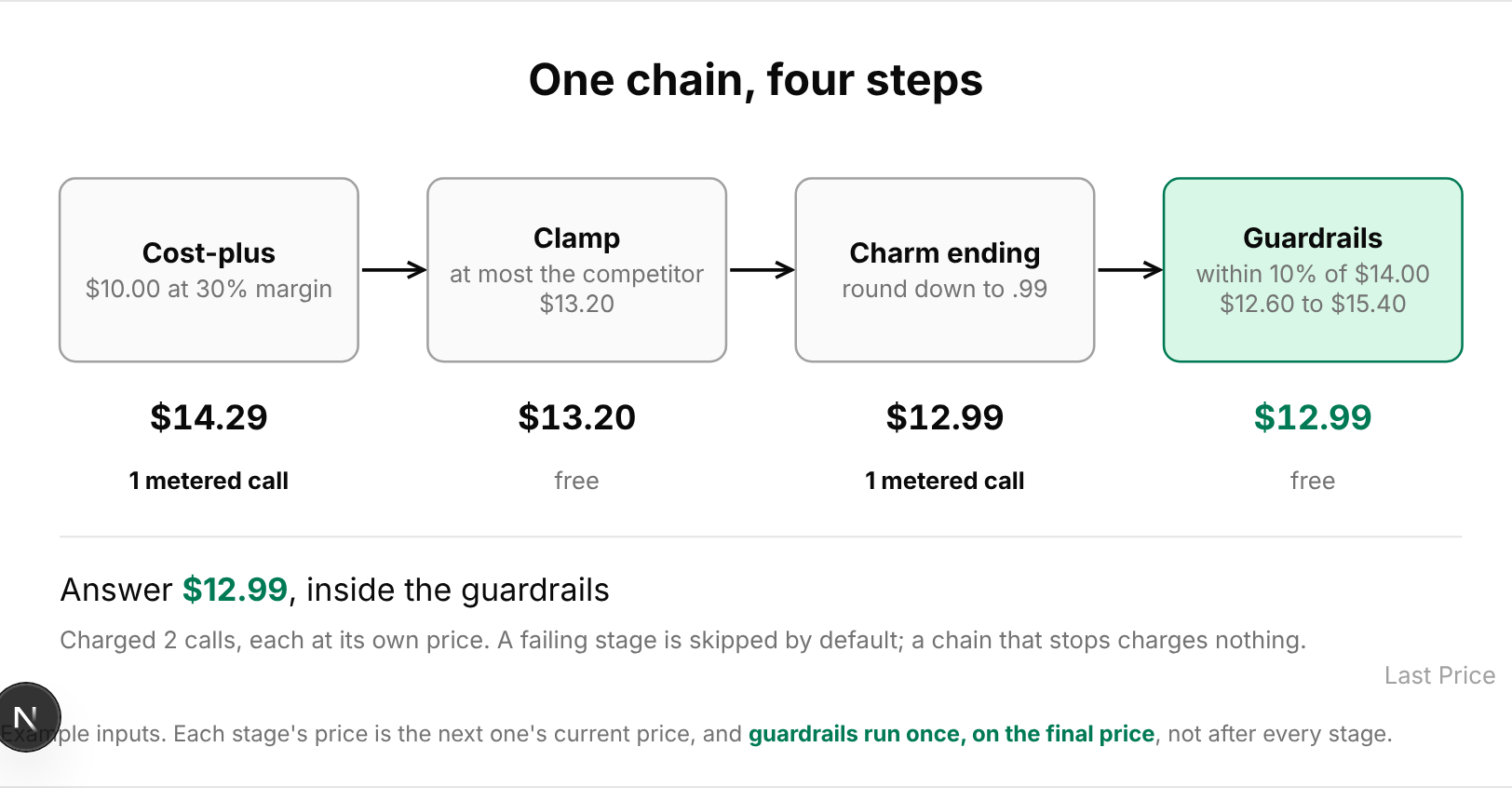
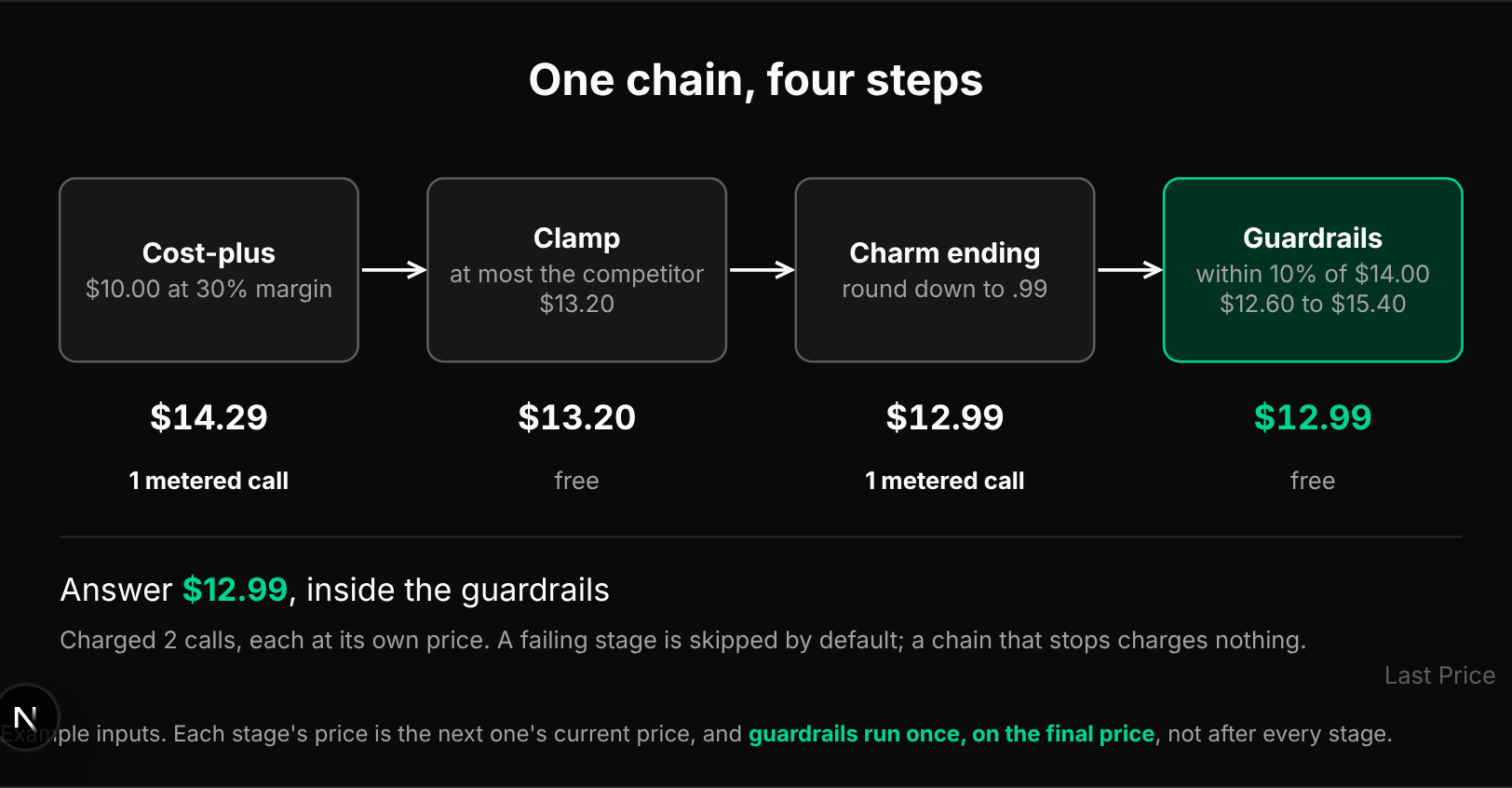
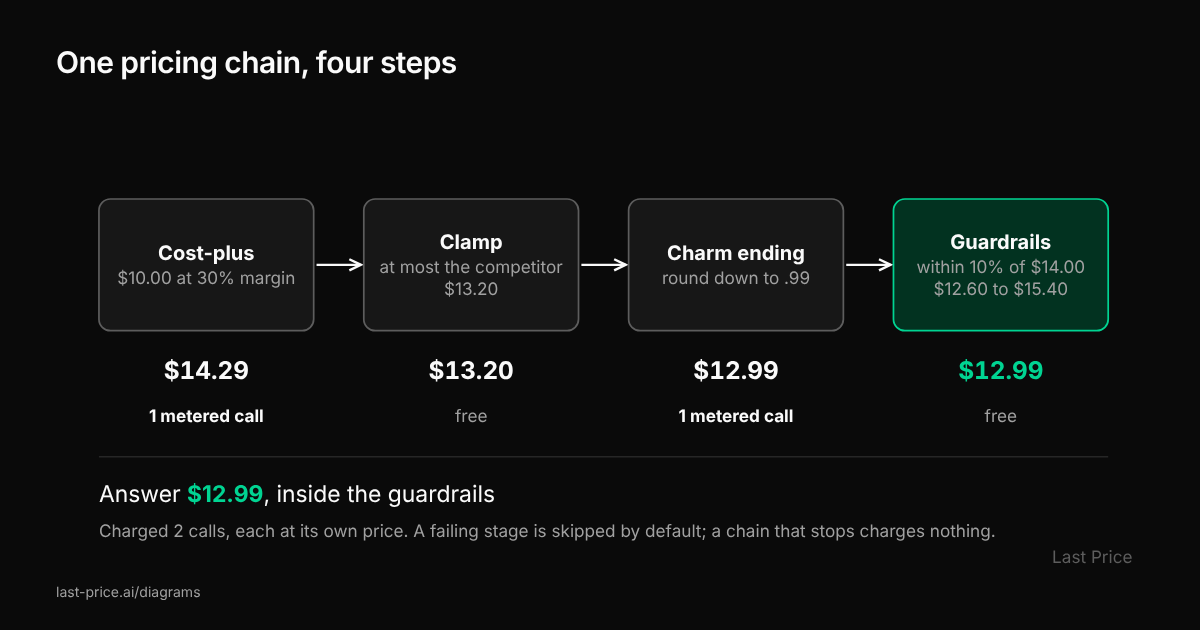
3.One pricing chain, four steps
Example inputs. Each stage's price is the next one's current price, and guardrails run once, on the final price, not after every stage. Try your own numbers. The picture is worked out again by the same rules.
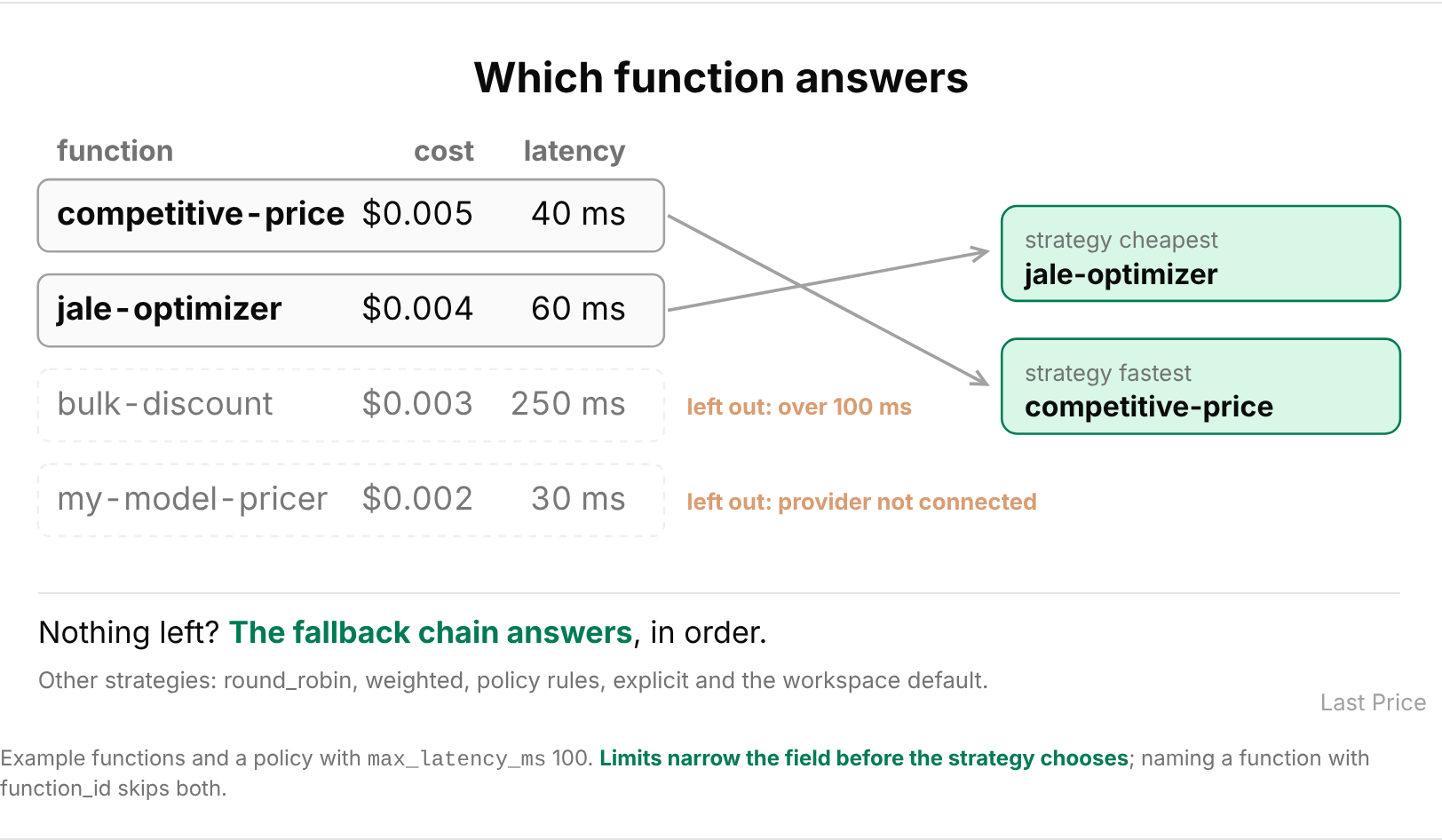
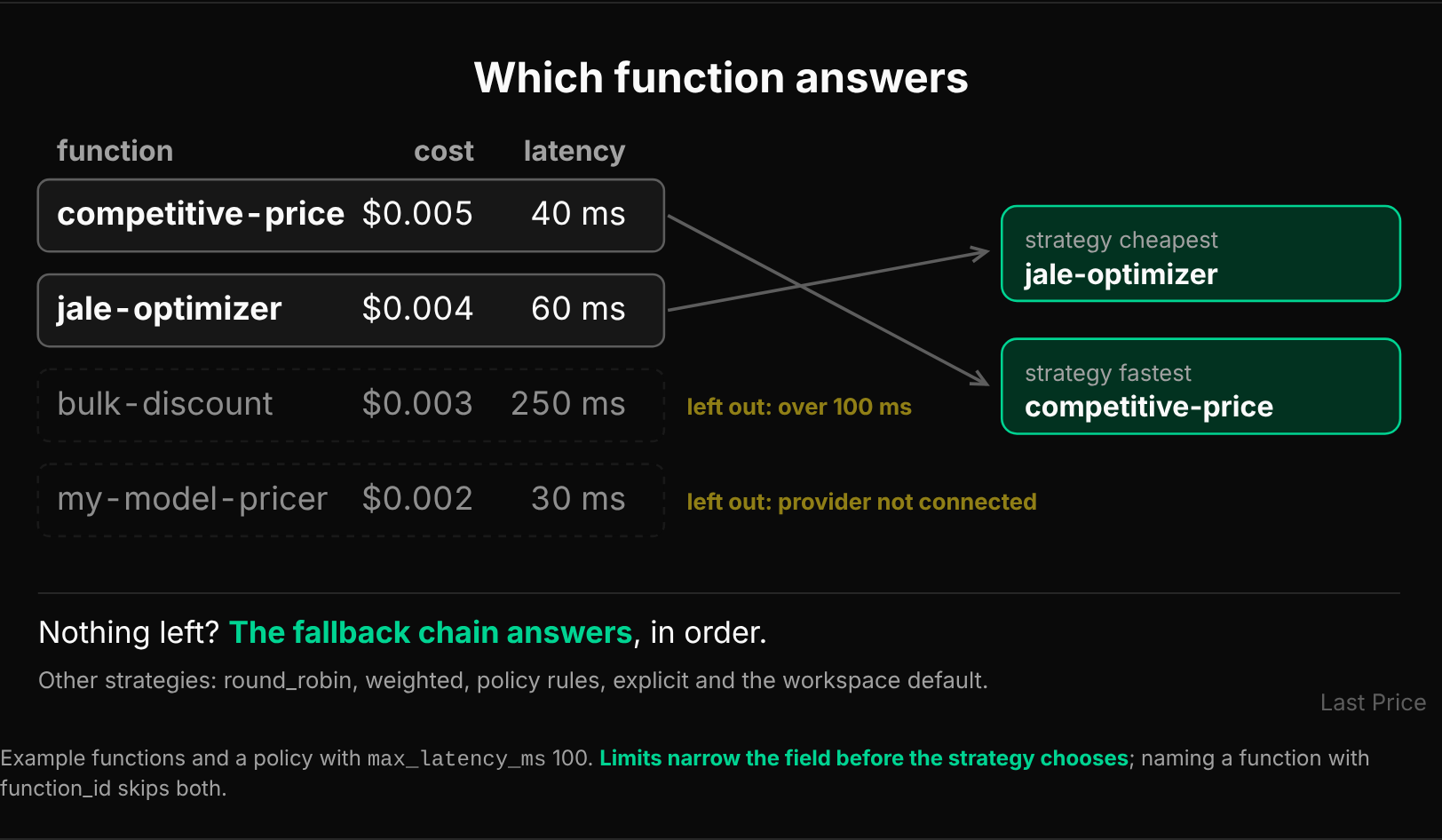
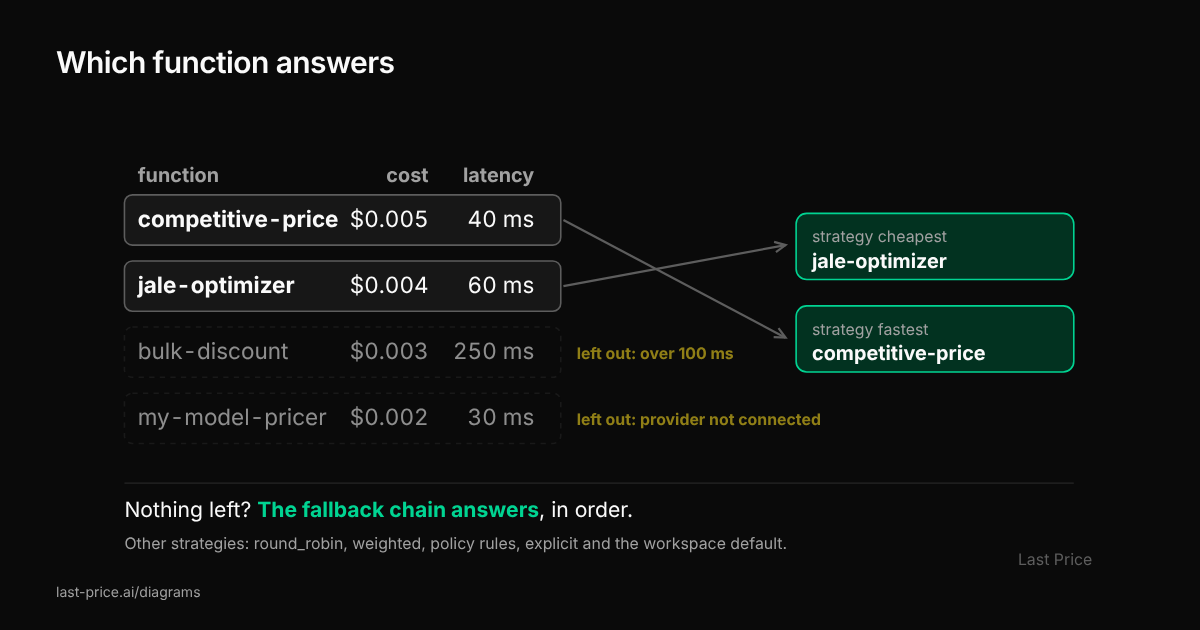
4.Which function answers
Example functions and a policy with max_latency_ms100. Limits narrow the field before the strategy chooses; naming a function with function_id skips both.Try your own numbers. The picture is worked out again by the same rules.
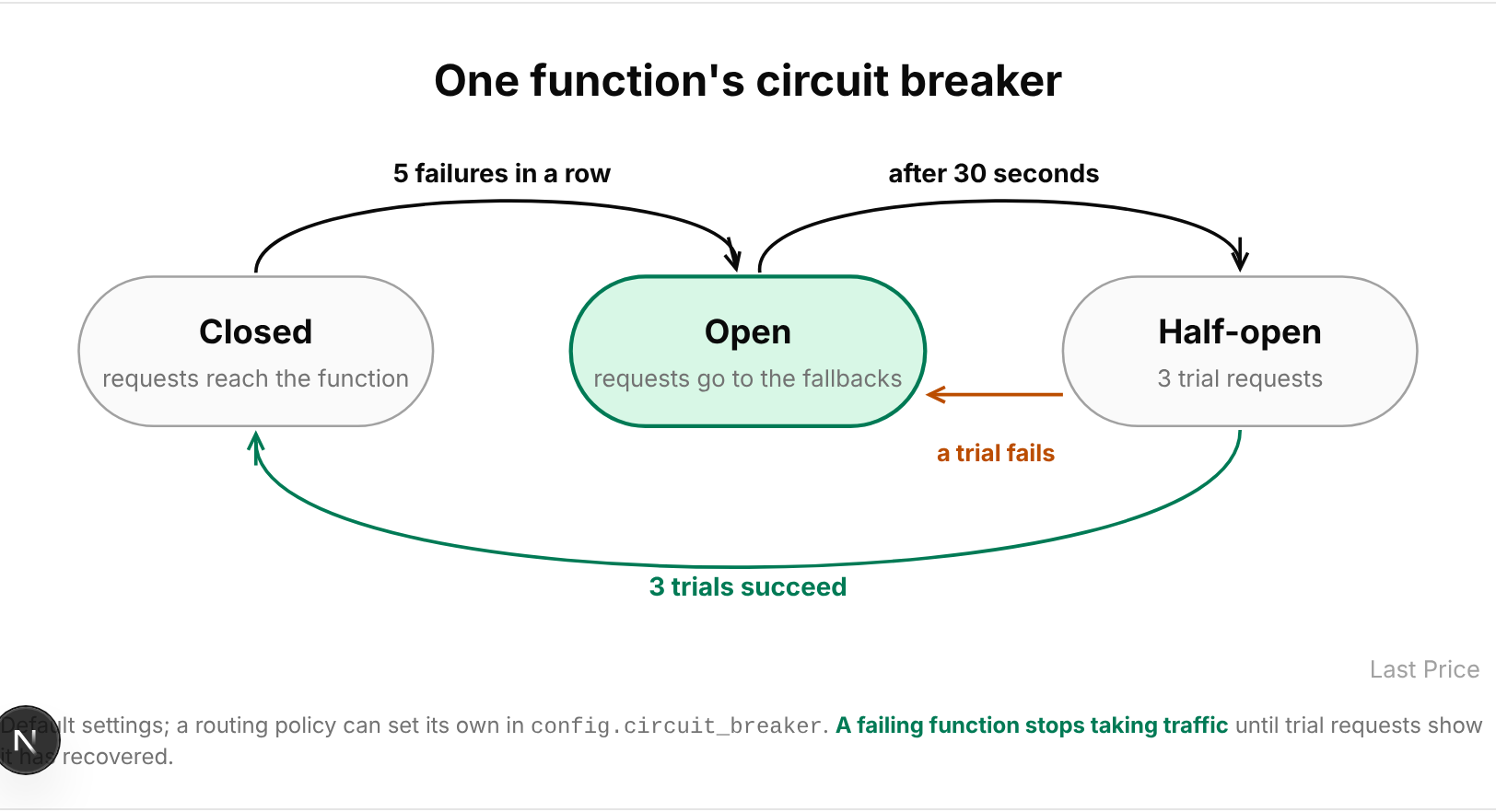
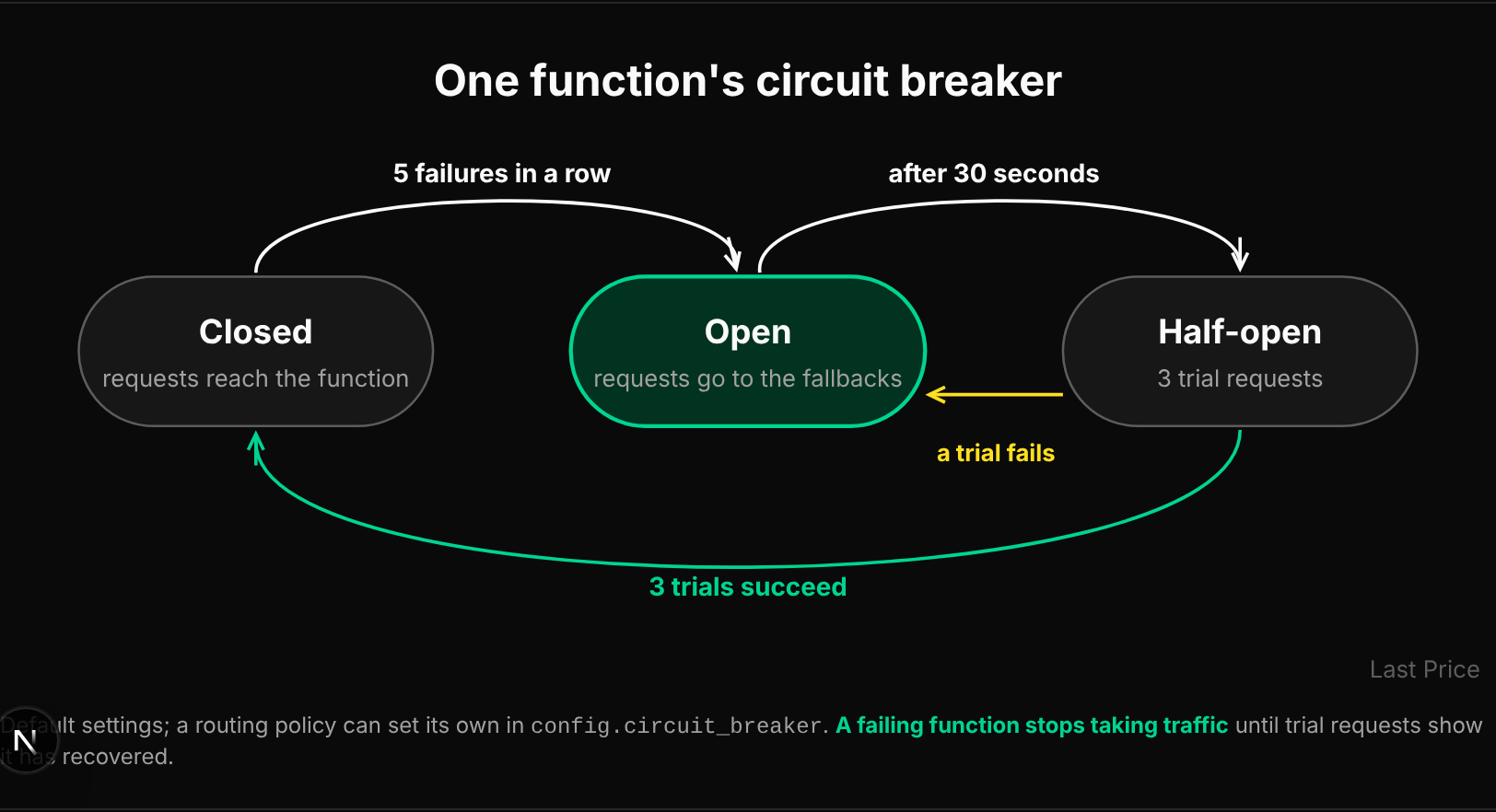
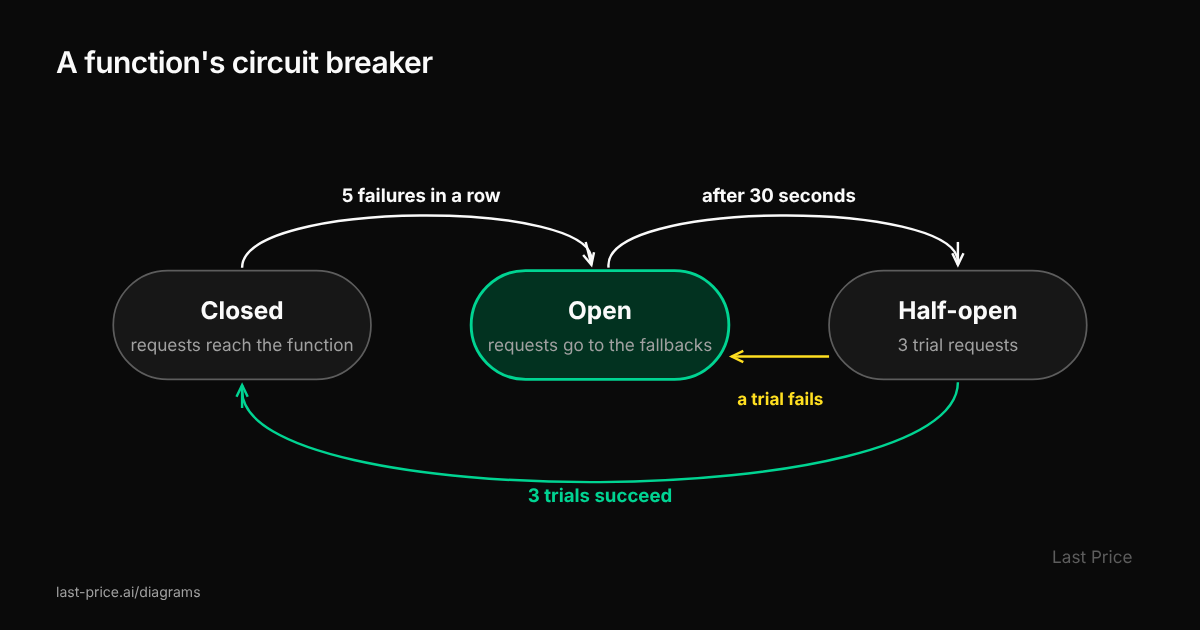
5.A function's circuit breaker
Default settings; a routing policy can set its own in config.circuit_breaker. A failing function stops taking traffic until trial requests show it has recovered.Try your own numbers. The picture is worked out again by the same rules.
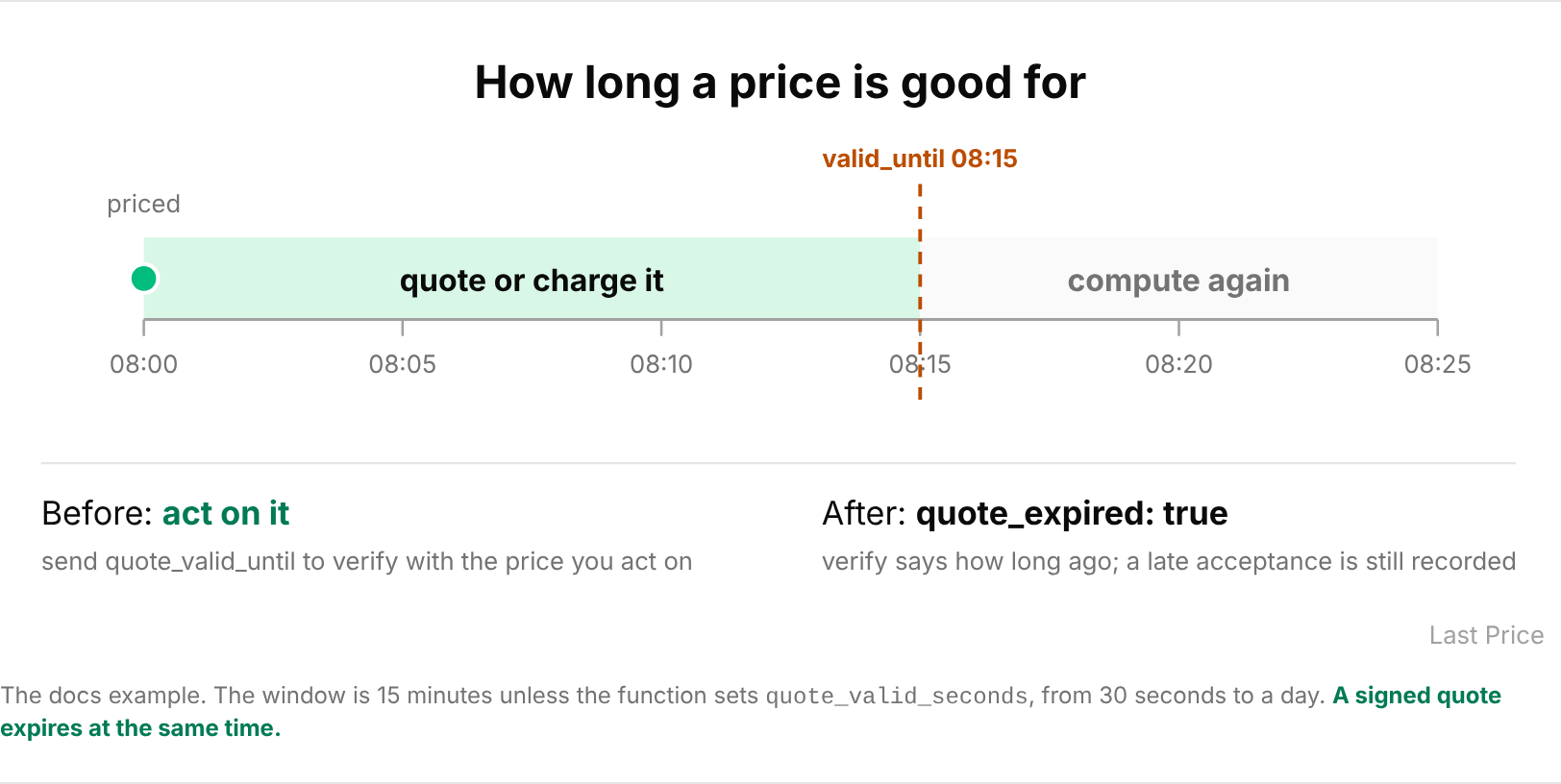
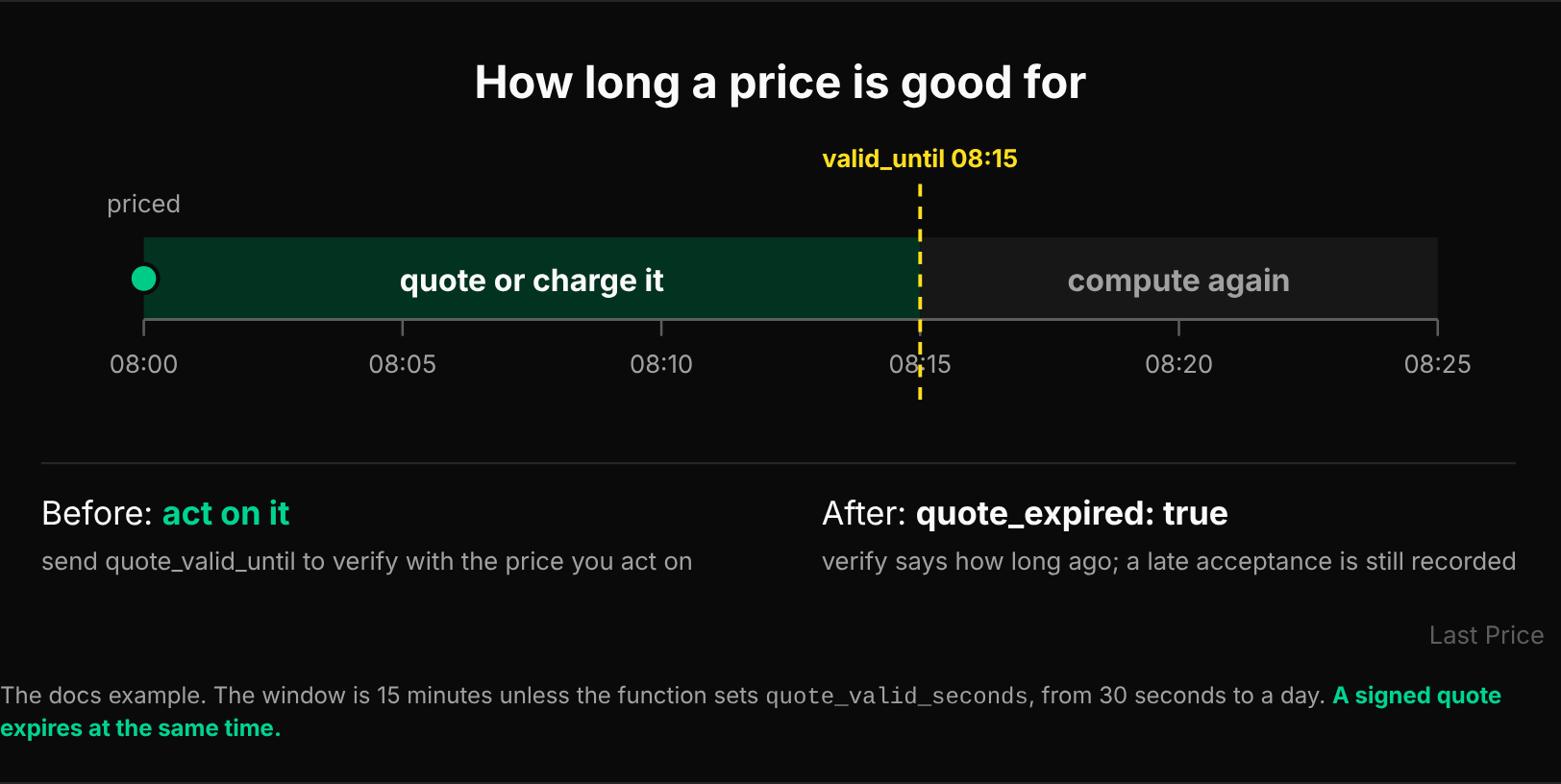
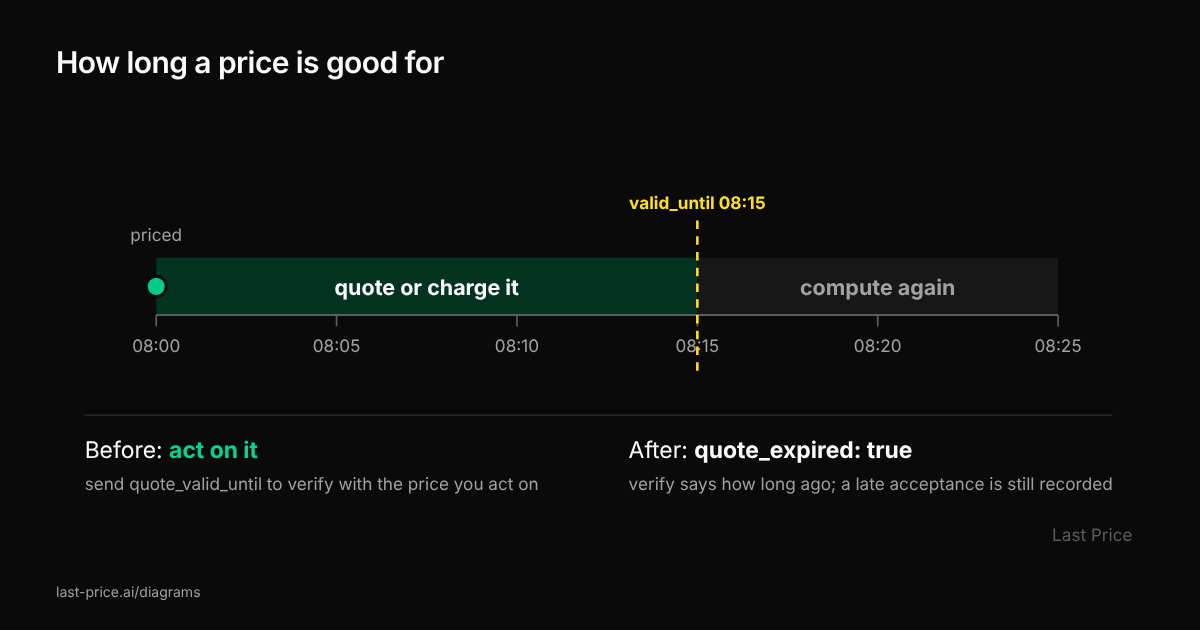
6.How long a price is good for
The docs example. The window is 15 minutes unless the function sets quote_valid_seconds, from 30 seconds to a day. A signed quote expires at the same time.Try your own numbers. The picture is worked out again by the same rules.
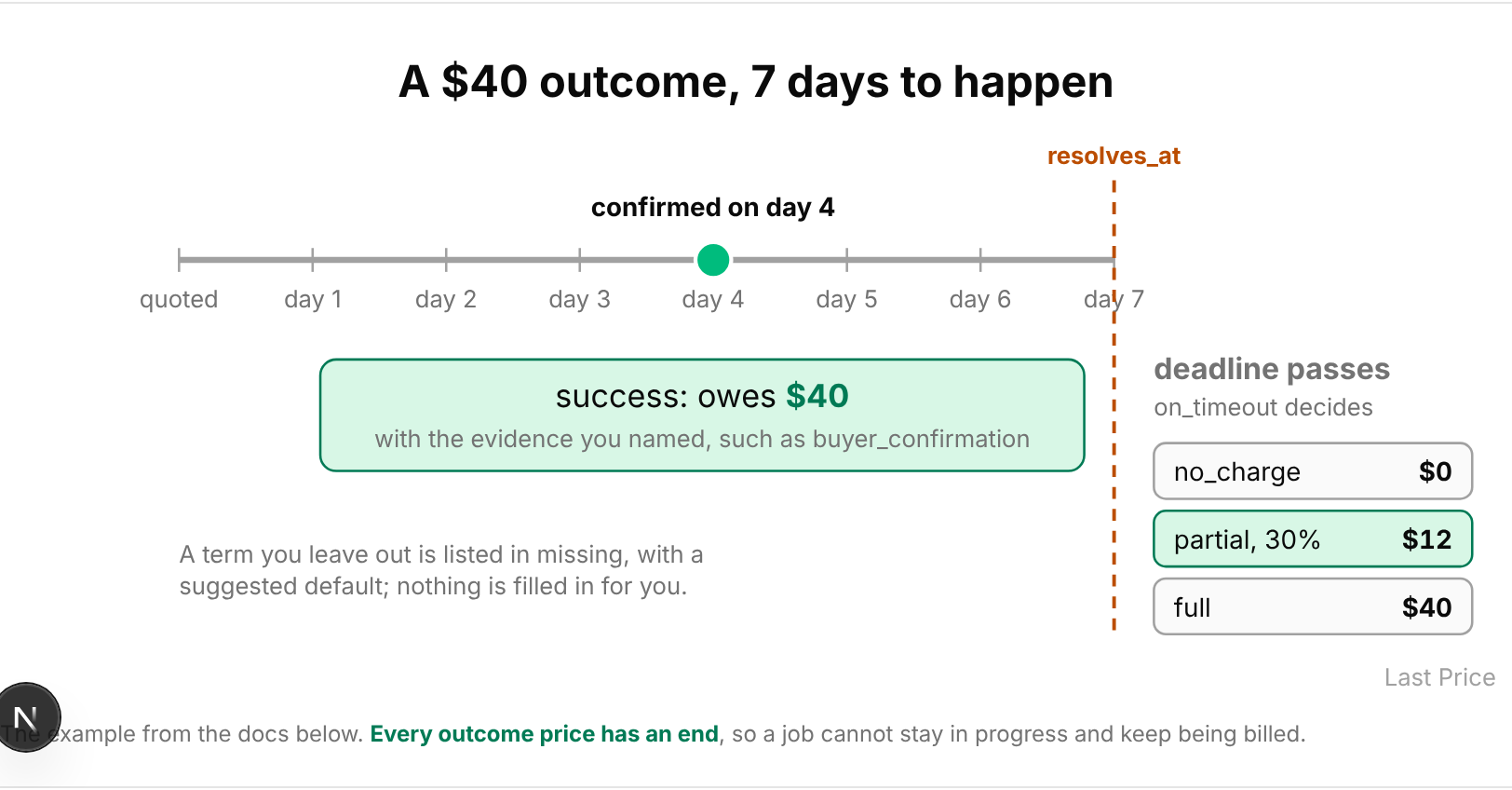
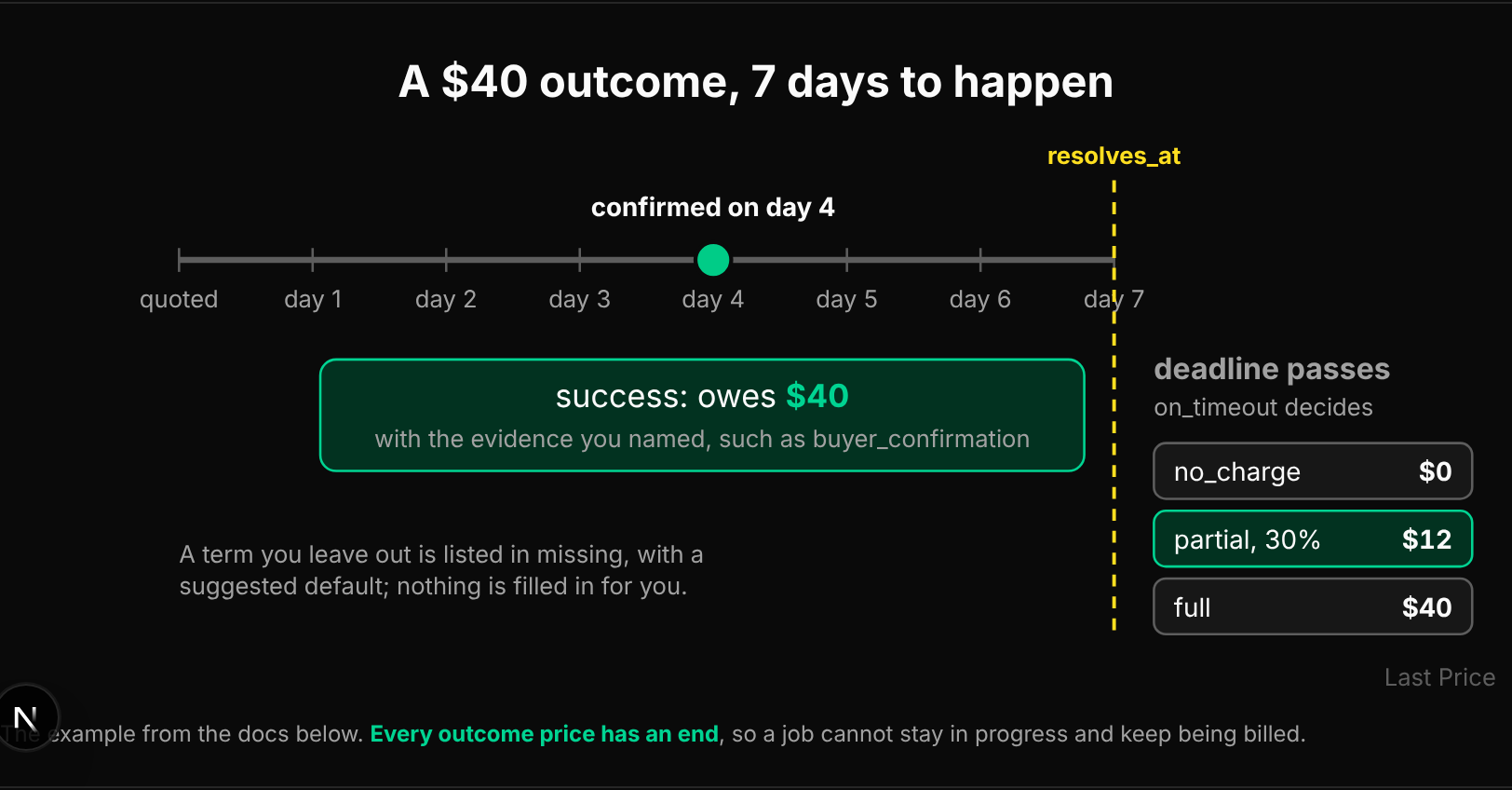
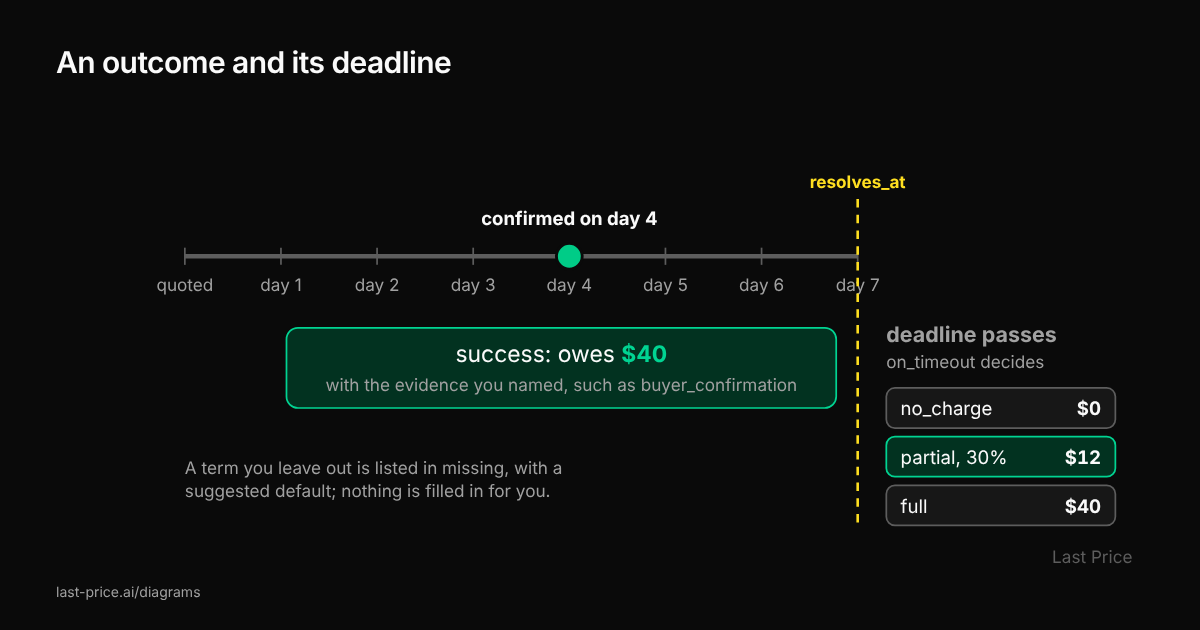
7.An outcome and its deadline
The example from the docs below. Every outcome price has an end, so a job cannot stay in progress and keep being billed. Try your own numbers. The picture is worked out again by the same rules.
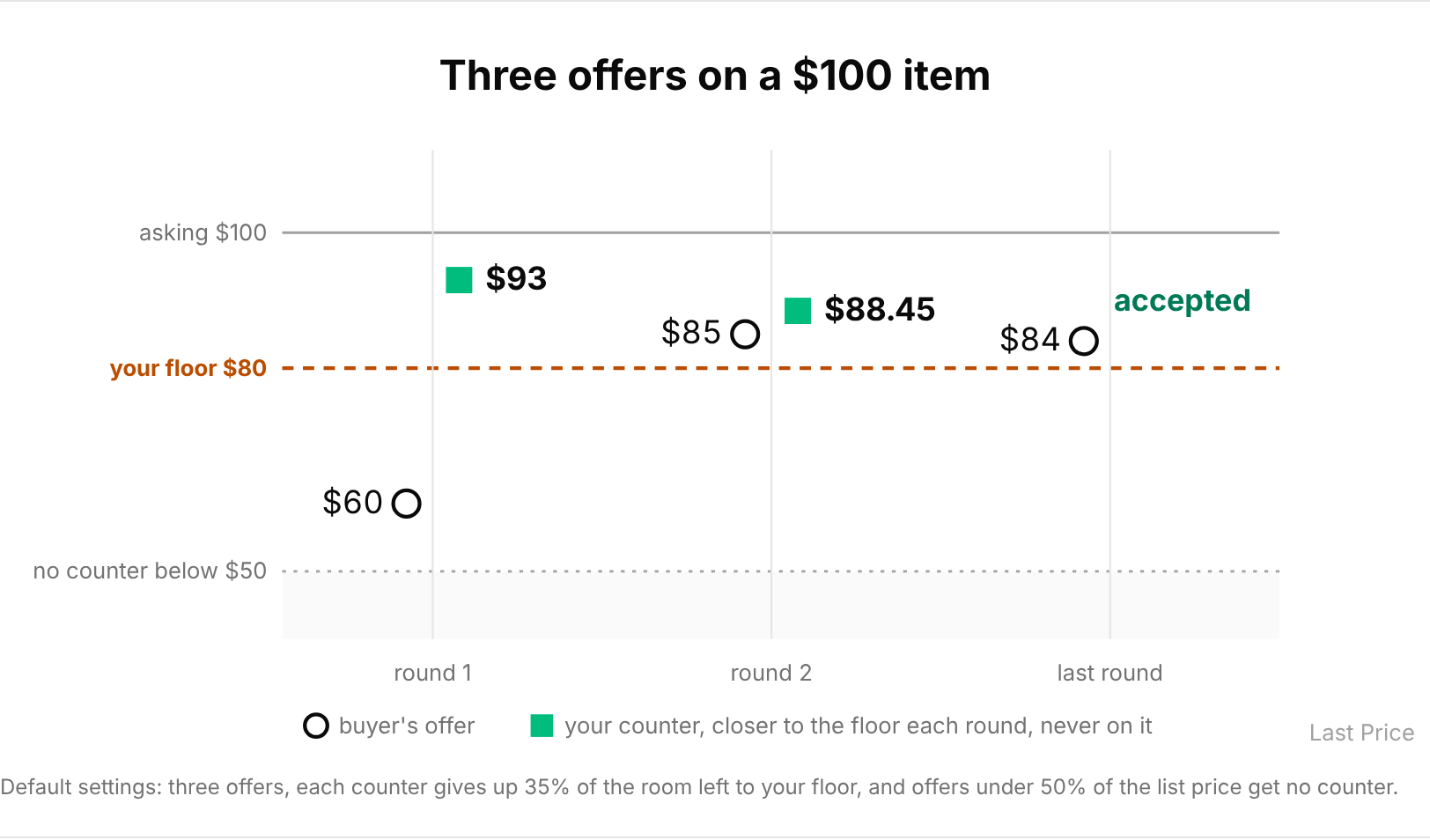
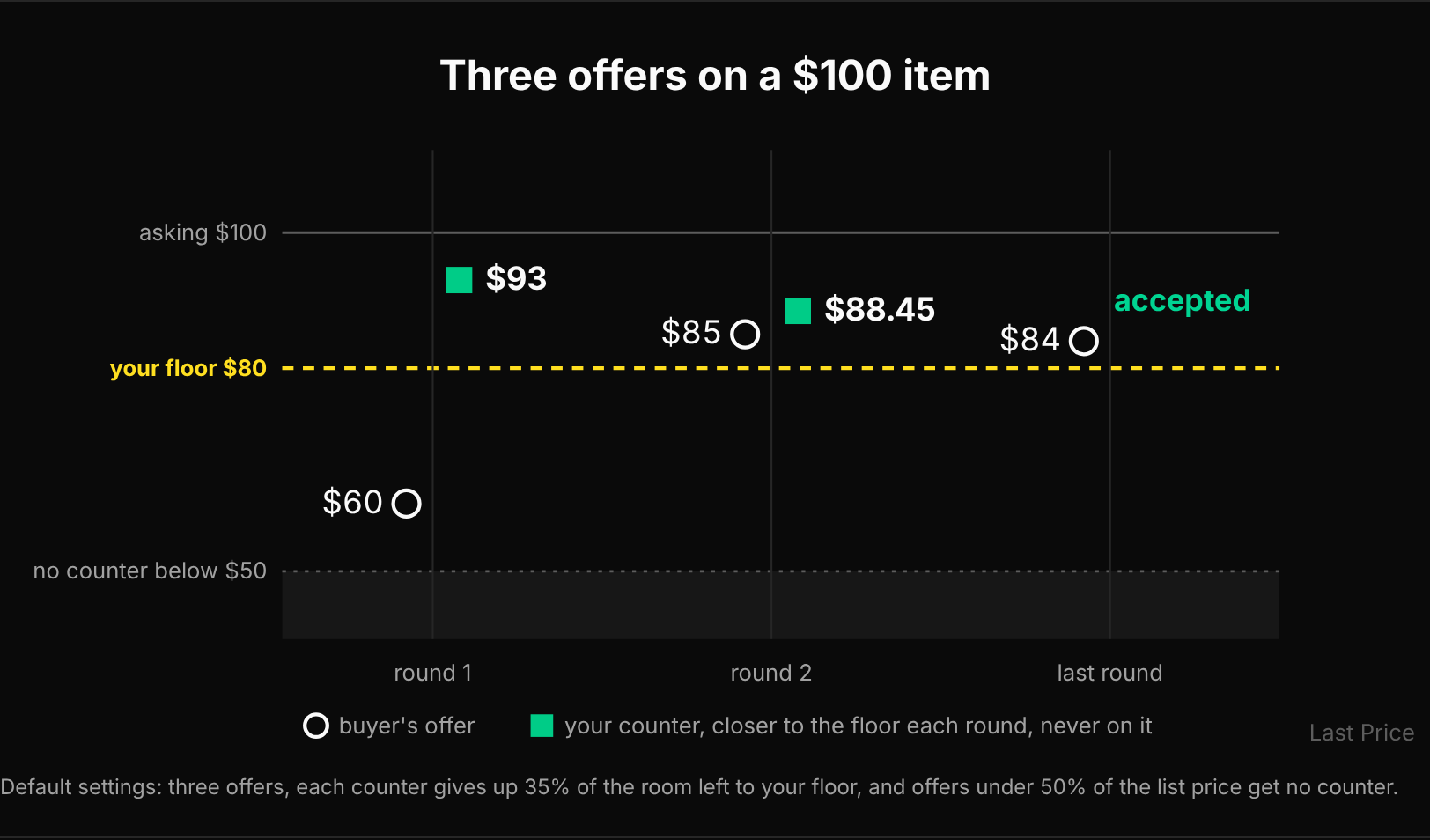
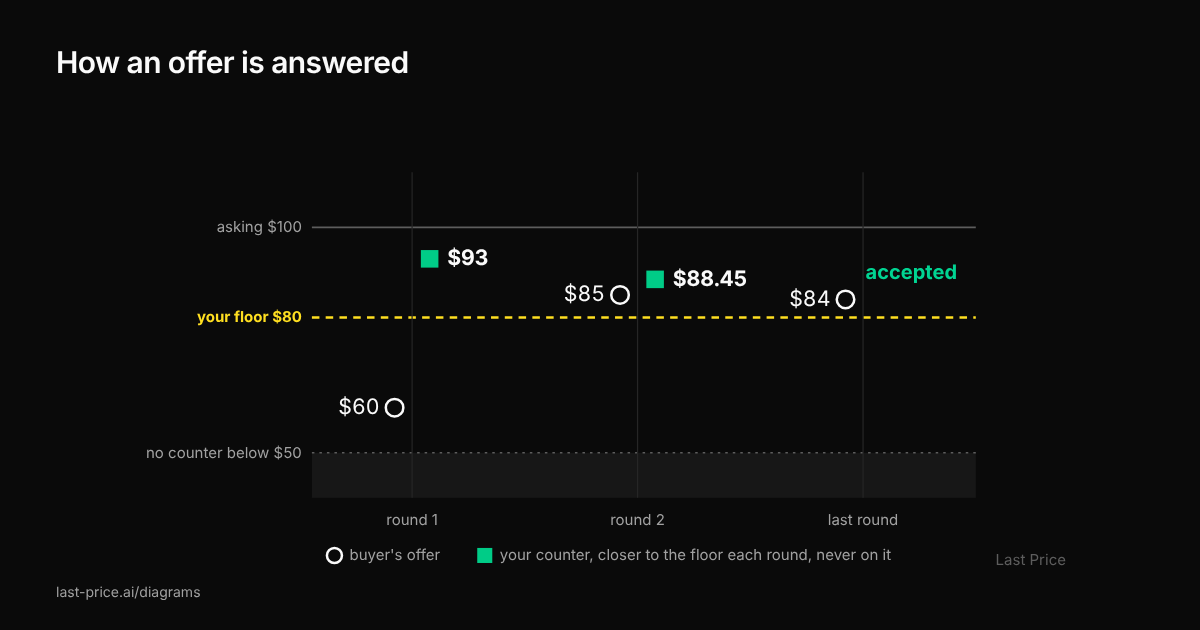
8.How an offer is answered
Default settings: three offers, each counter gives up 35% of the room left to your floor, and offers under 50% of the list price get no counter. Try your own numbers. The picture is worked out again by the same rules.
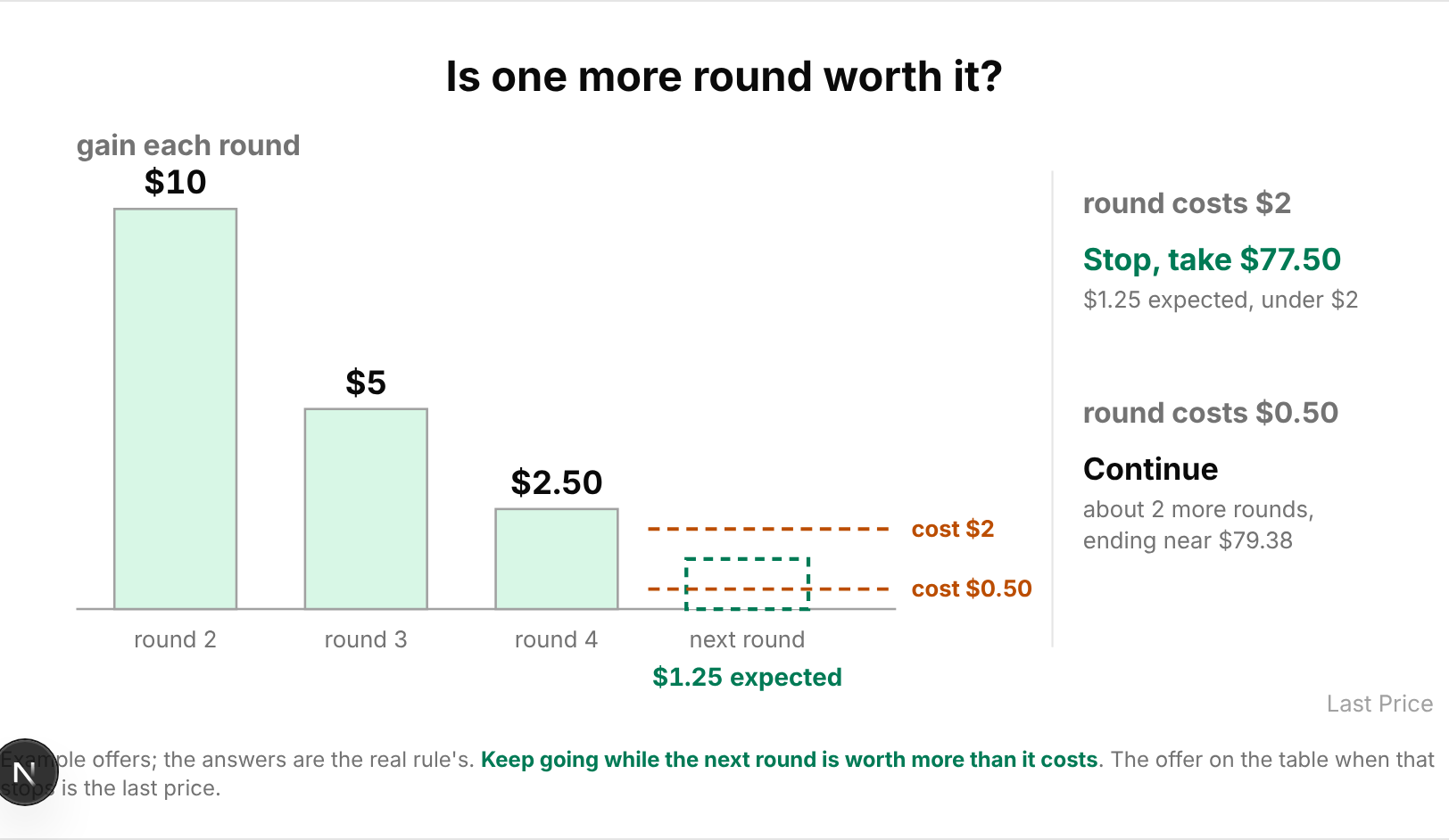
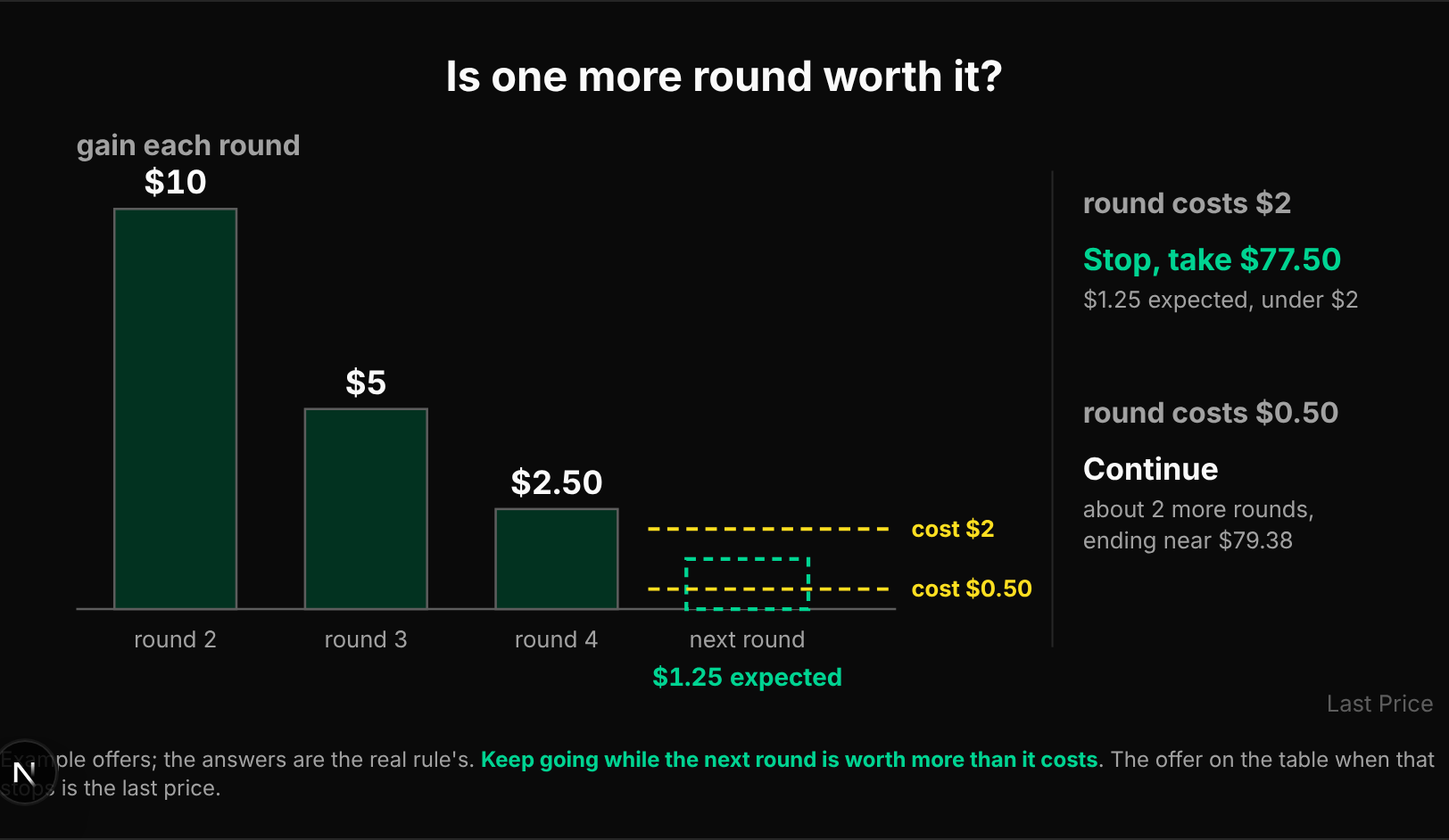
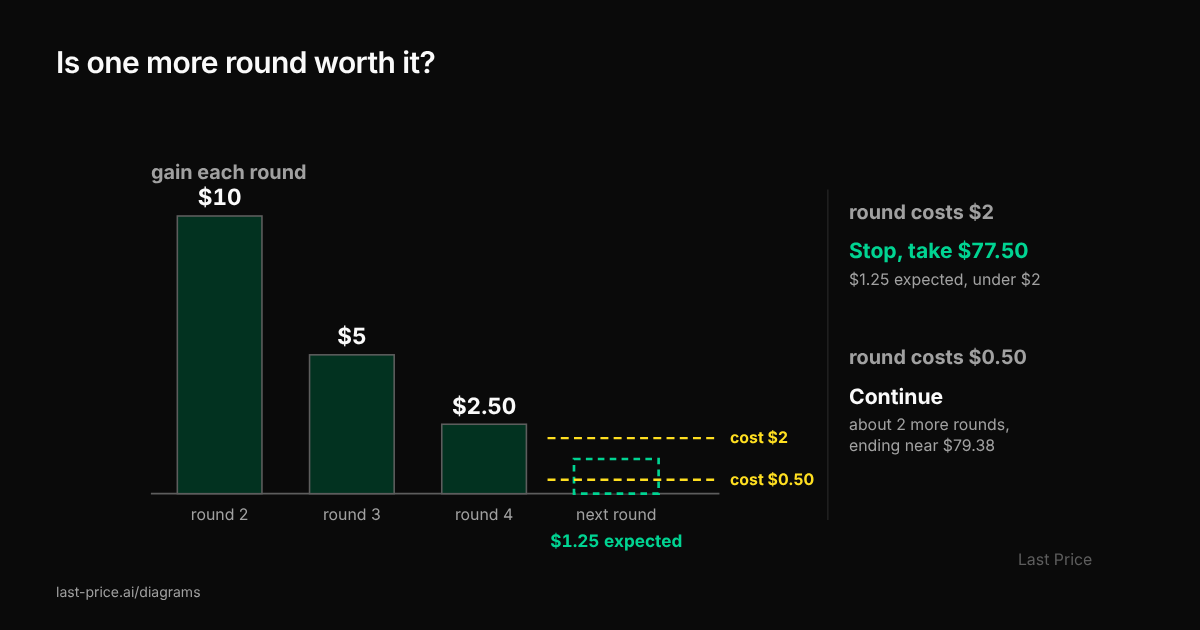
9.Is one more round worth it?
Example offers; the answers are the real rule's. Keep going while the next round is worth more than it costs. The offer on the table when that stops is the last price. Try your own numbers. The picture is worked out again by the same rules.
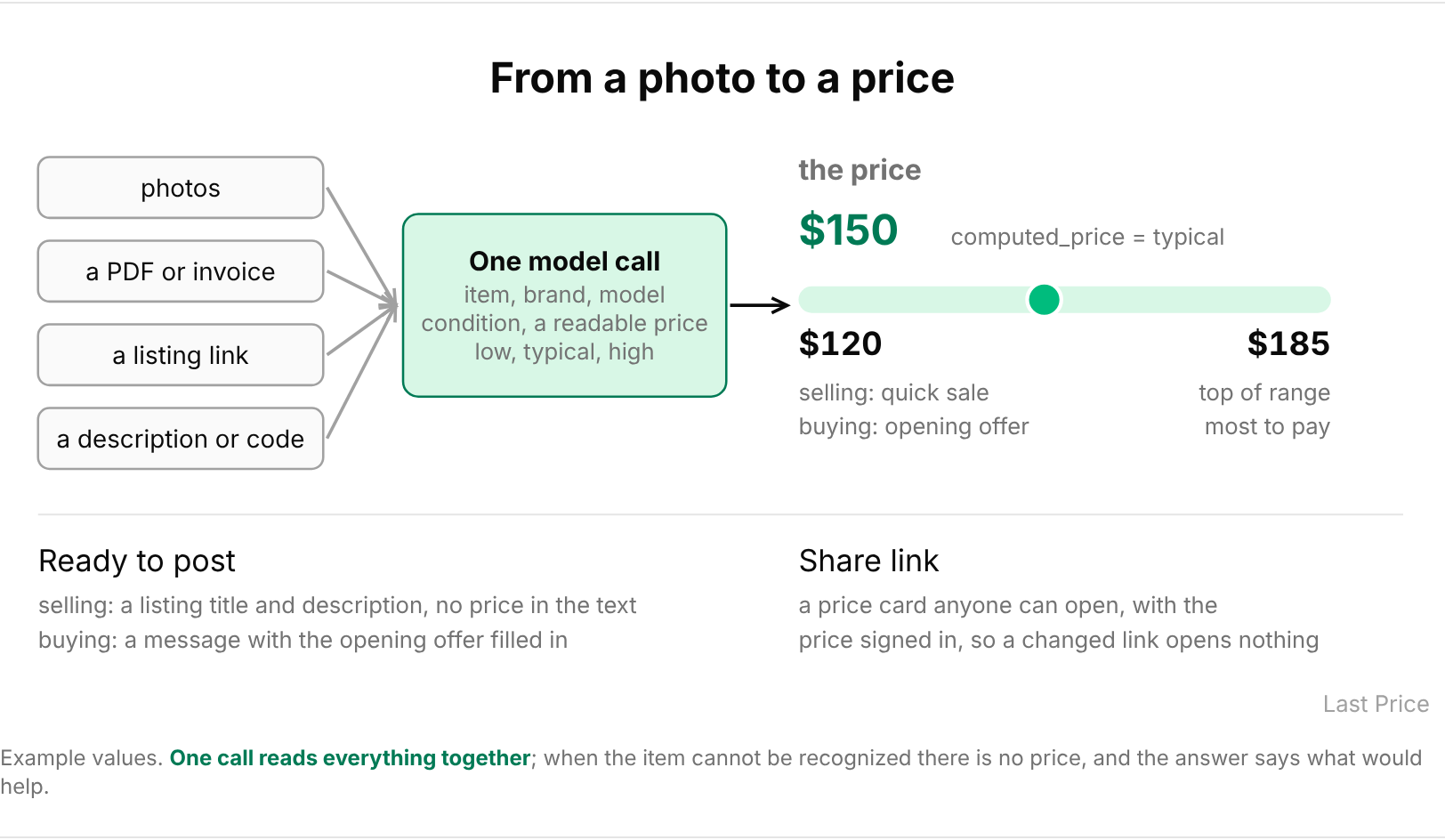
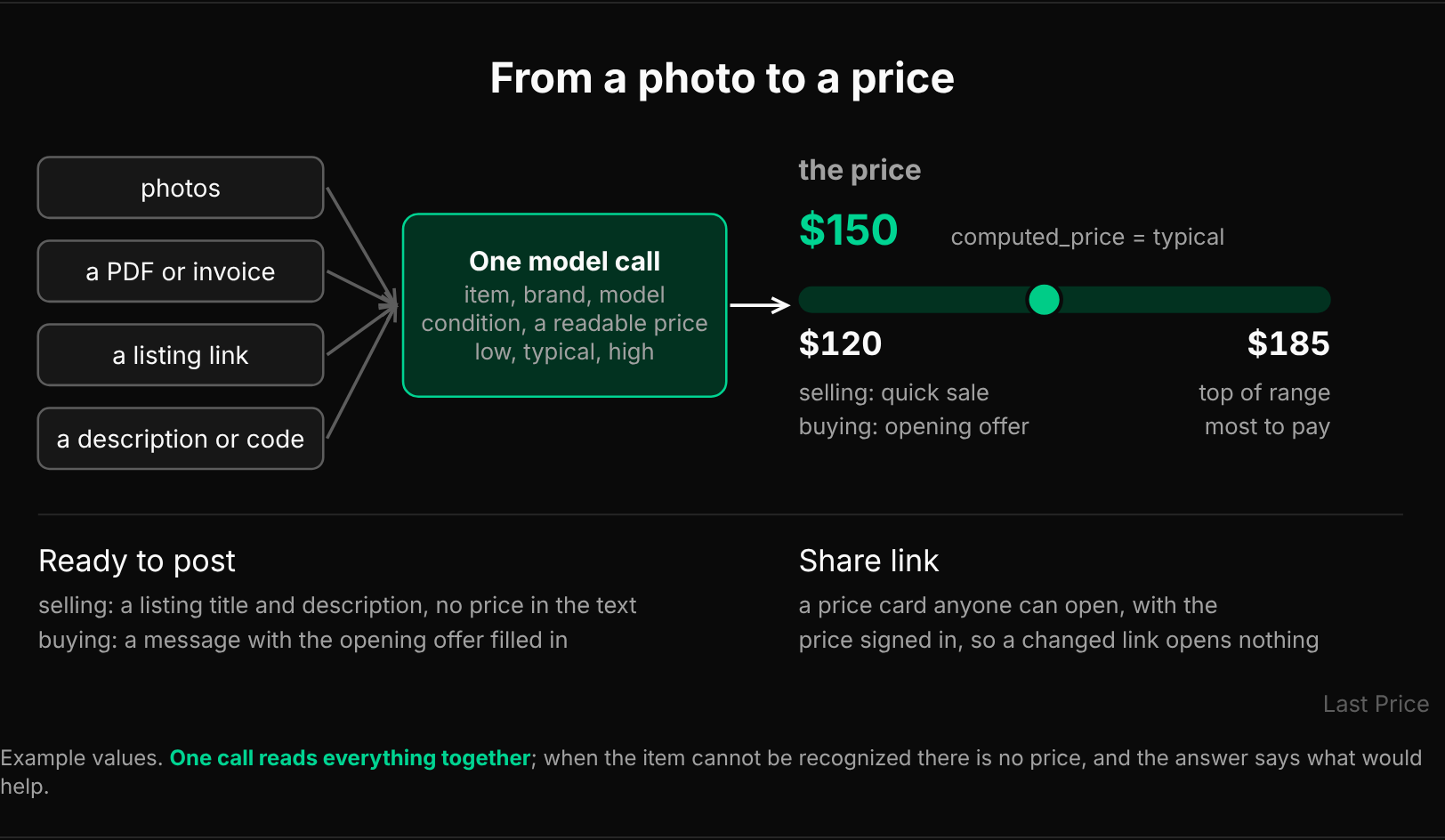
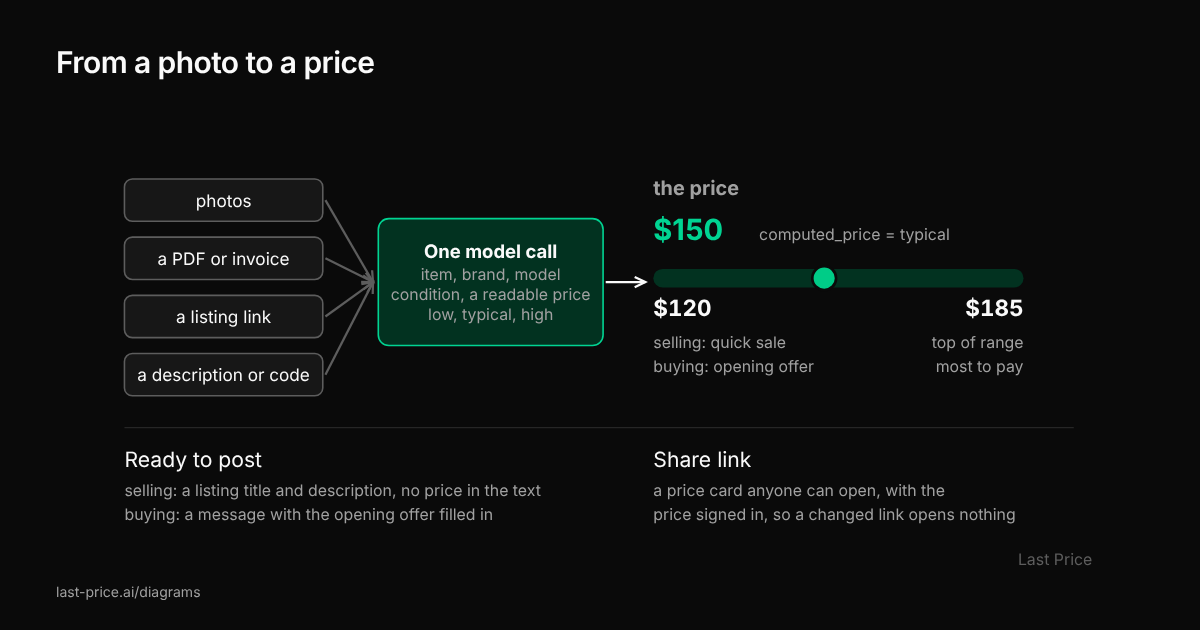
10.From a photo to a price
Example values. One call reads everything together; when the item cannot be recognized there is no price, and the answer says what would help. Try your own numbers. The picture is worked out again by the same rules.
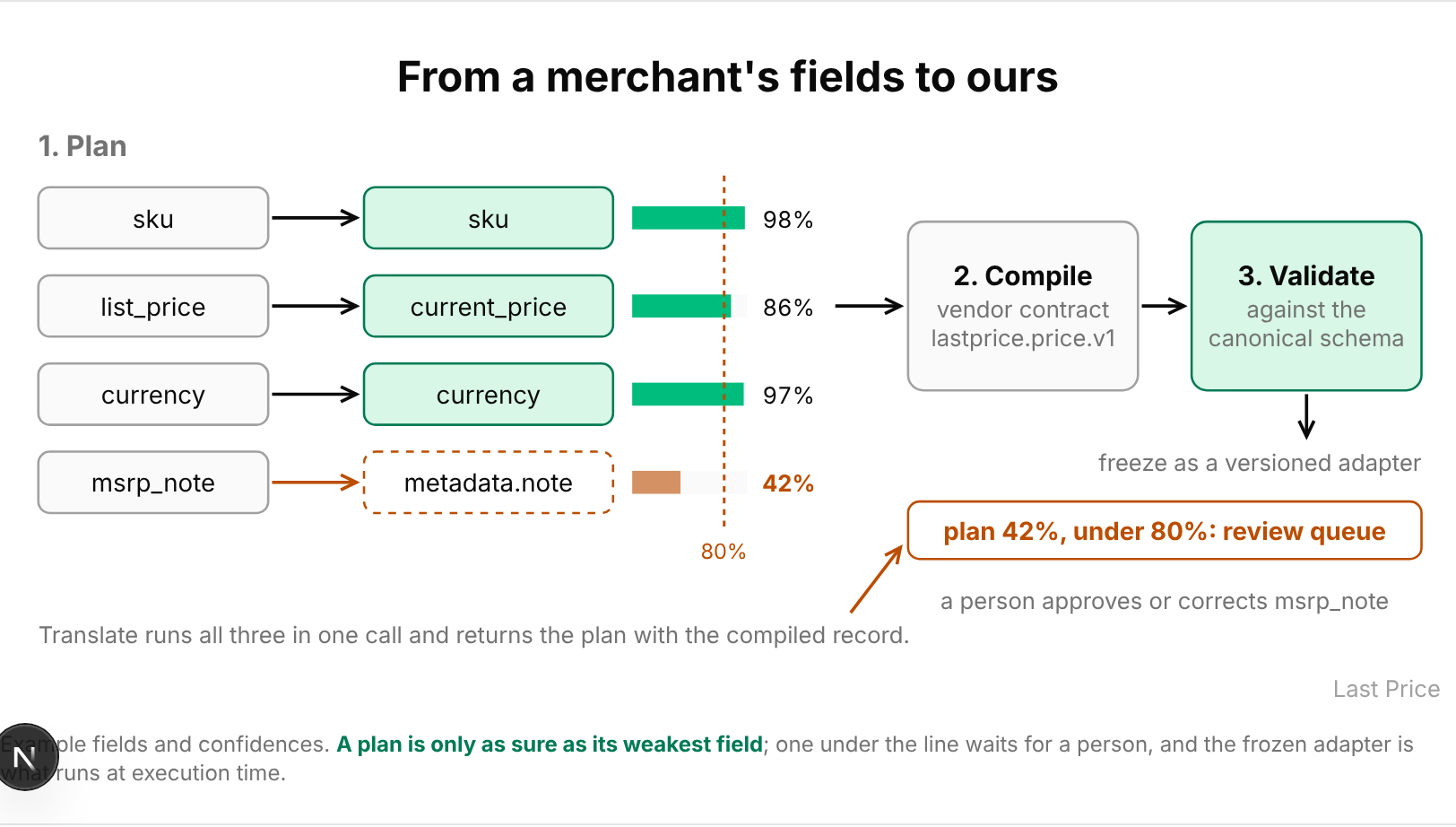
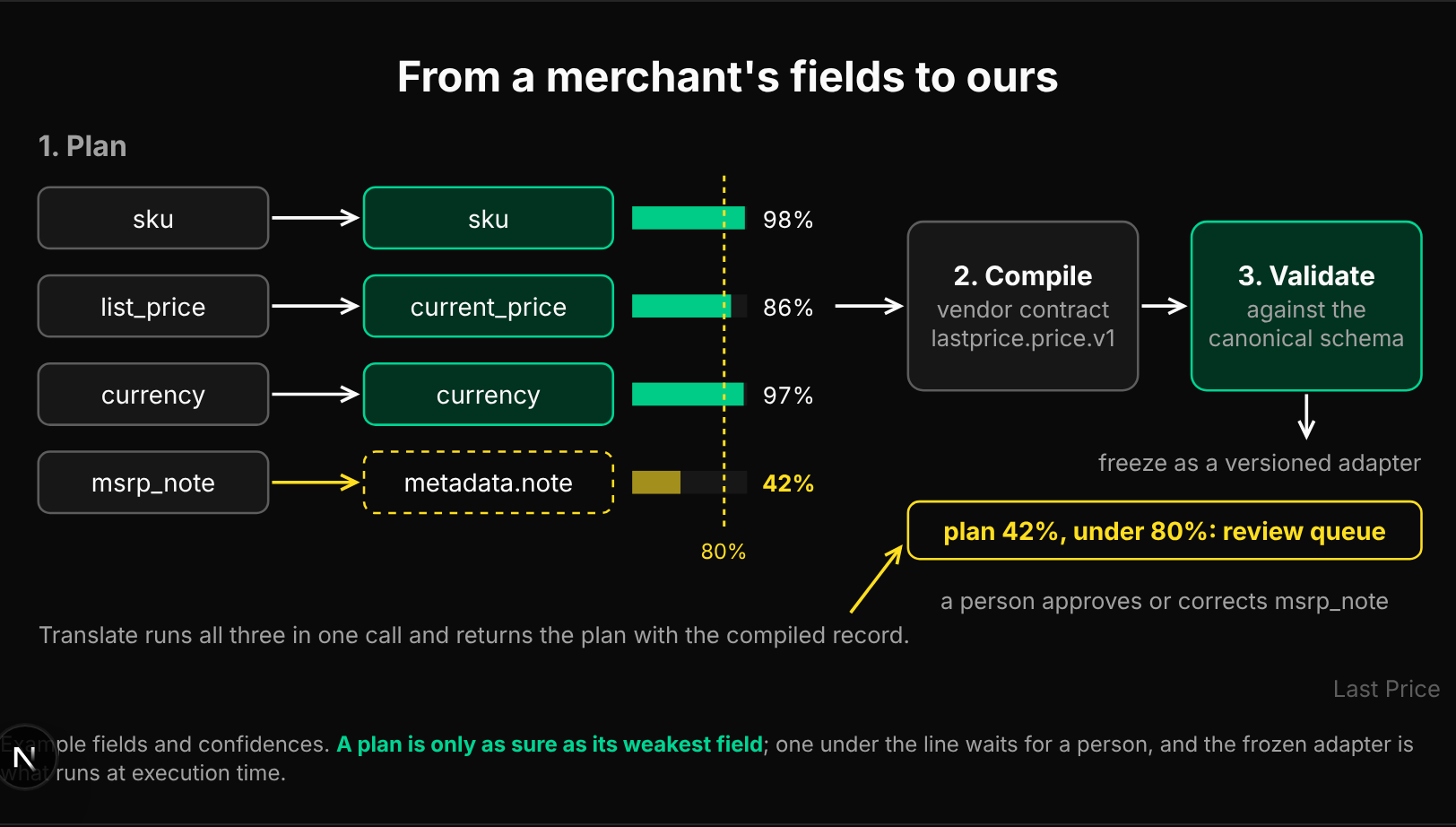
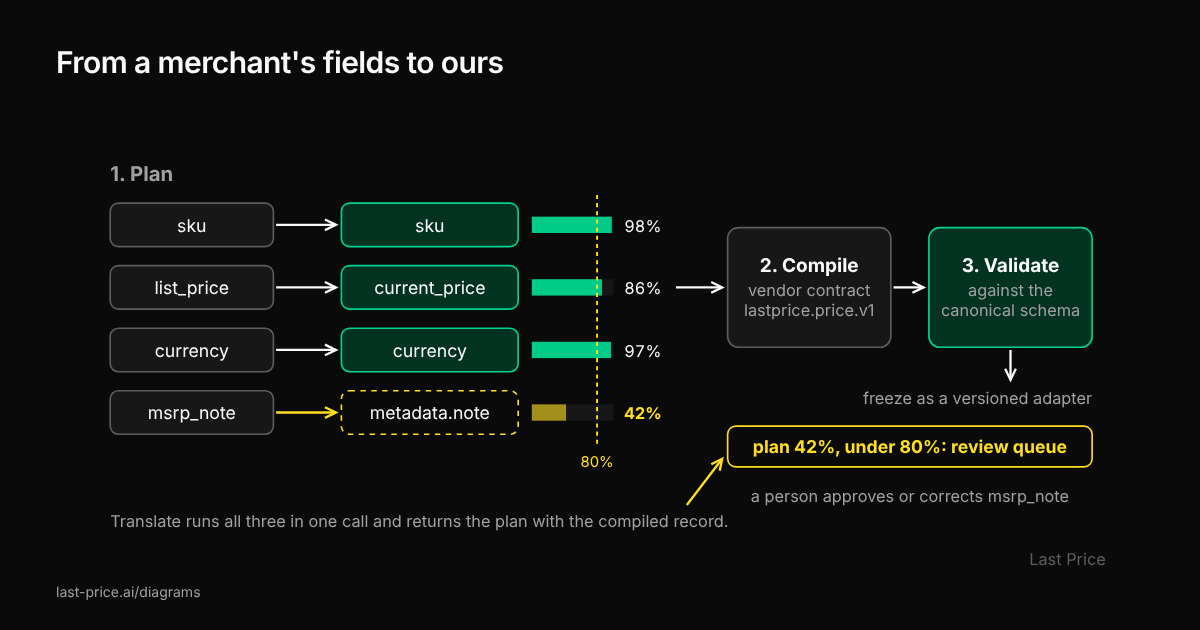
11.From a merchant's fields to ours
Example fields and confidences. A plan is only as sure as its weakest field; one under the line waits for a person, and the frozen adapter is what runs at execution time. Try your own numbers. The picture is worked out again by the same rules.
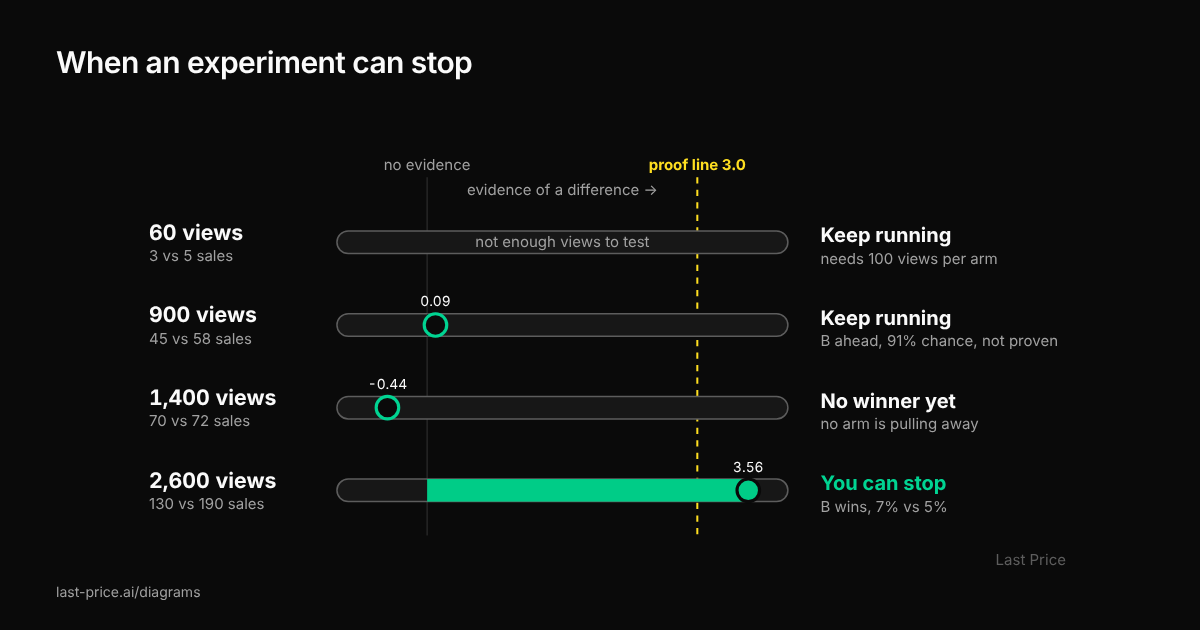
12.When an experiment can stop
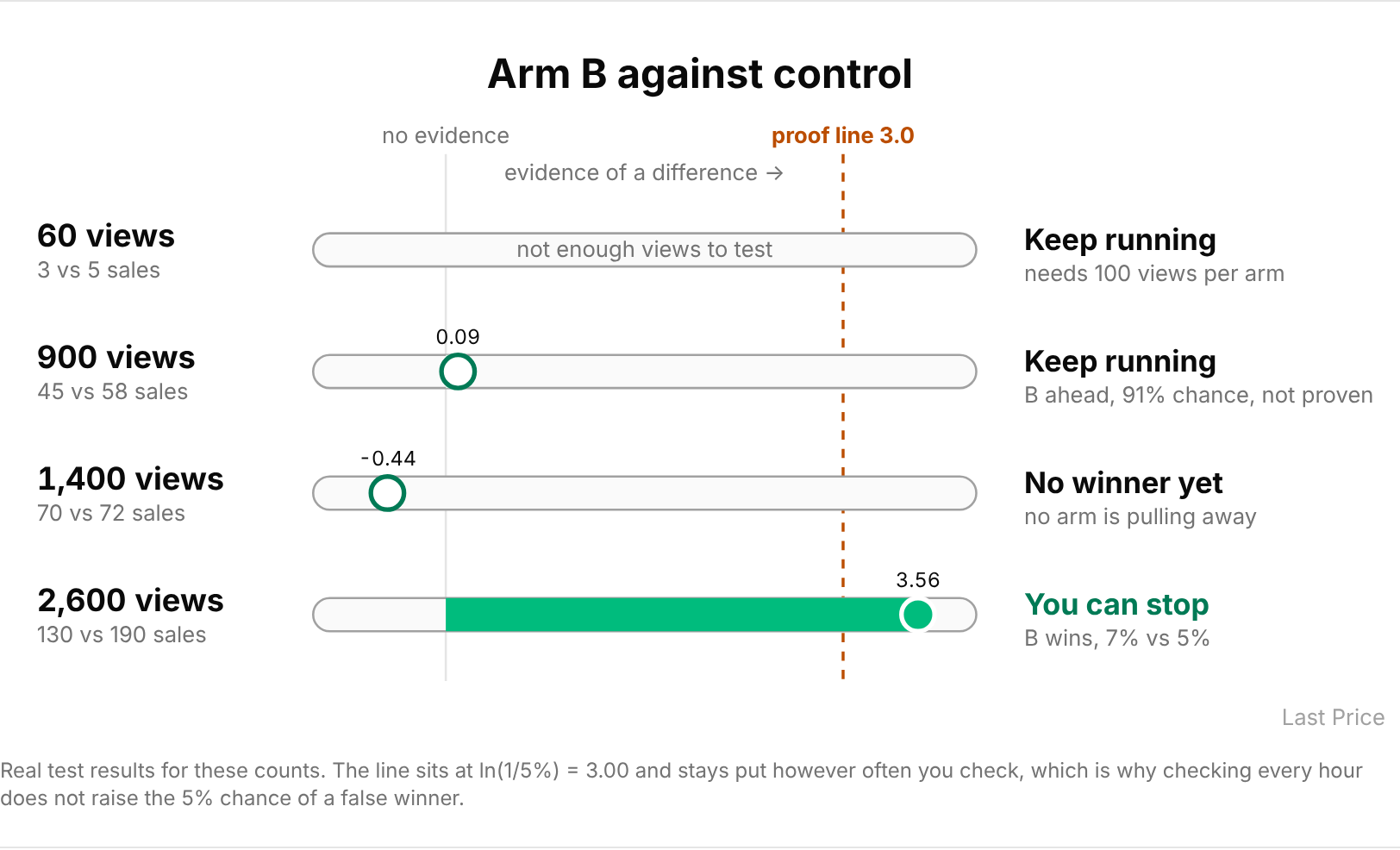
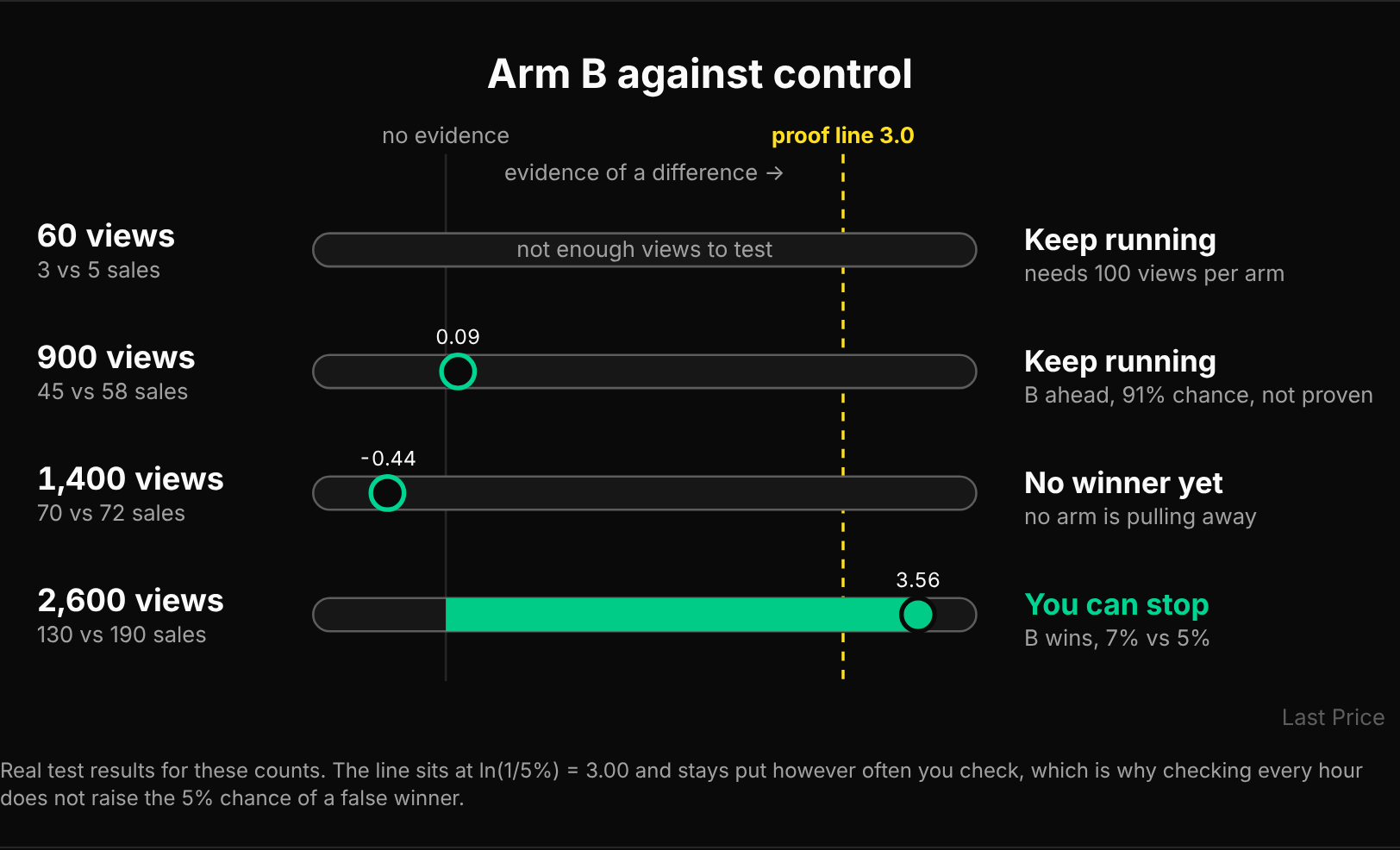
Real test results for these counts. The line sits at ln(1/5%) = 3.00 and stays put however often you check, which is why checking every hour does not raise the 5% chance of a false winner. 13.Traffic moving to the likely winner
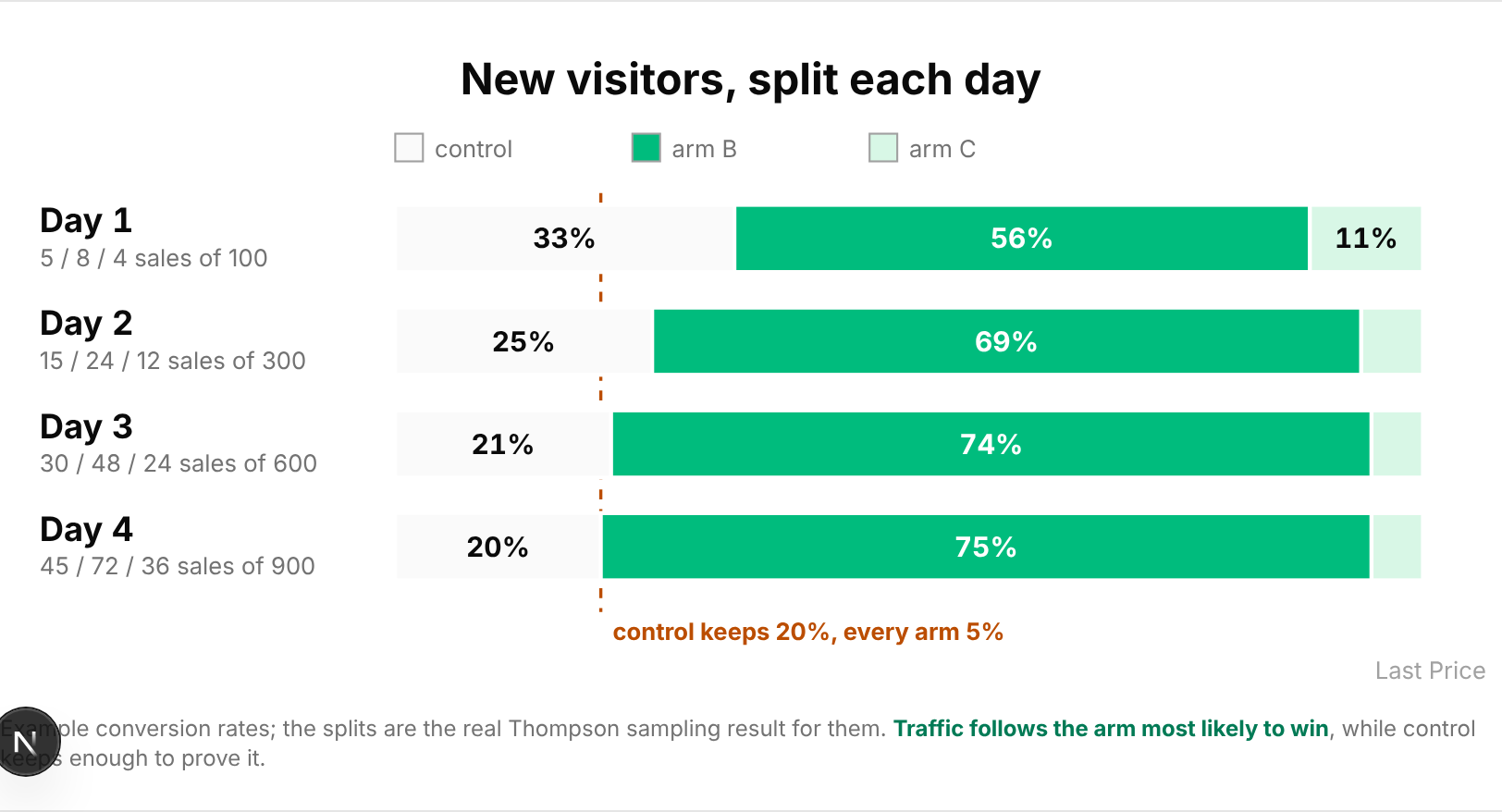
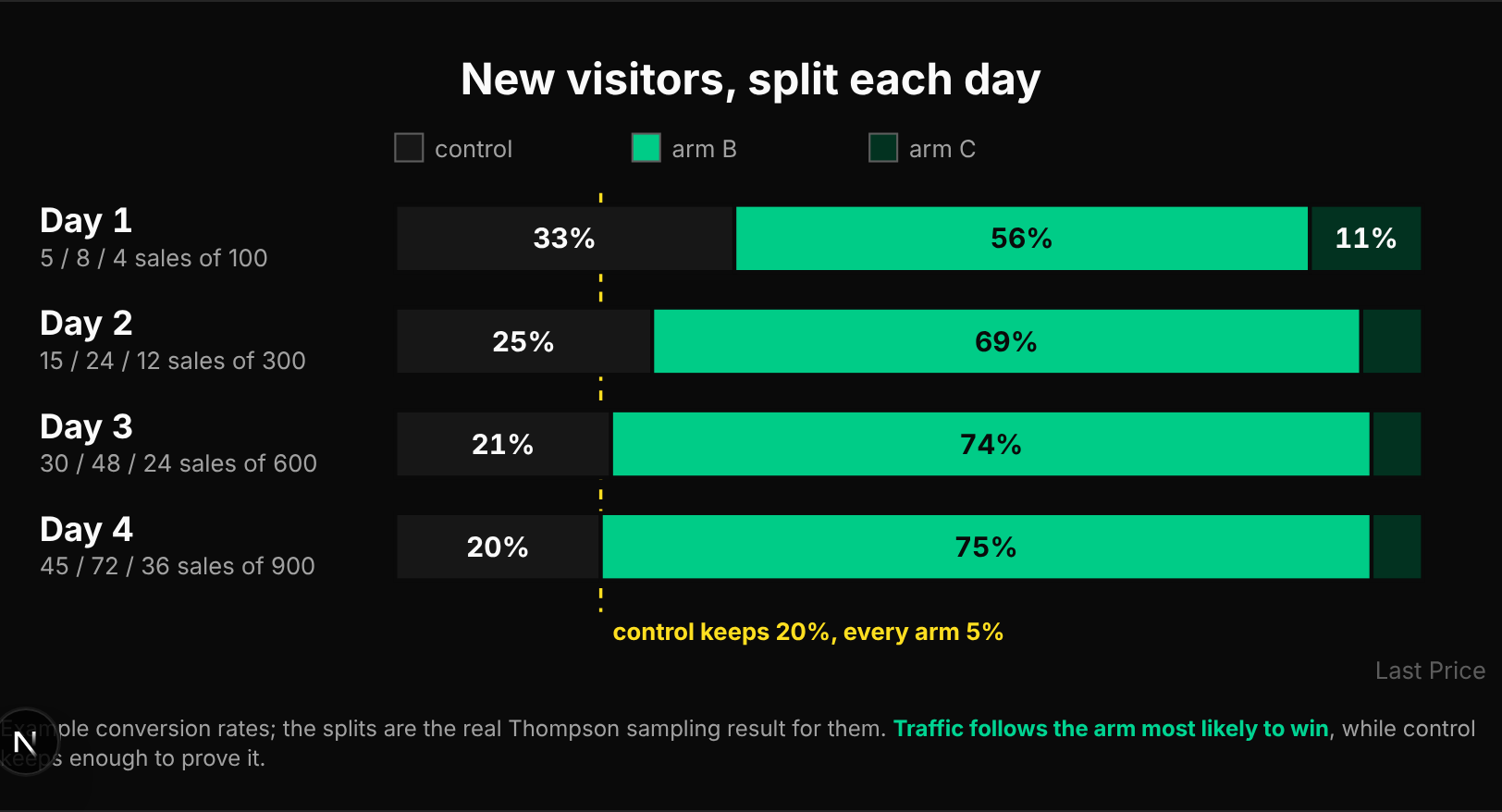
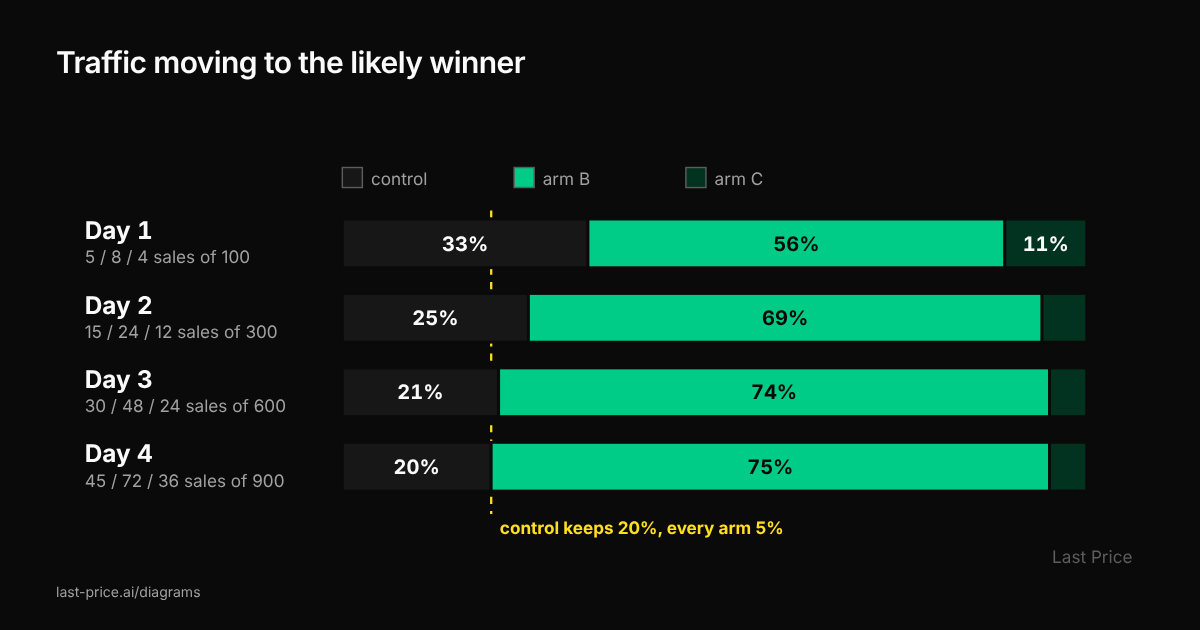
Example conversion rates; the splits are the real Thompson sampling result for them. Traffic follows the arm most likely to win, while control keeps enough to prove it. Try your own numbers. The picture is worked out again by the same rules.
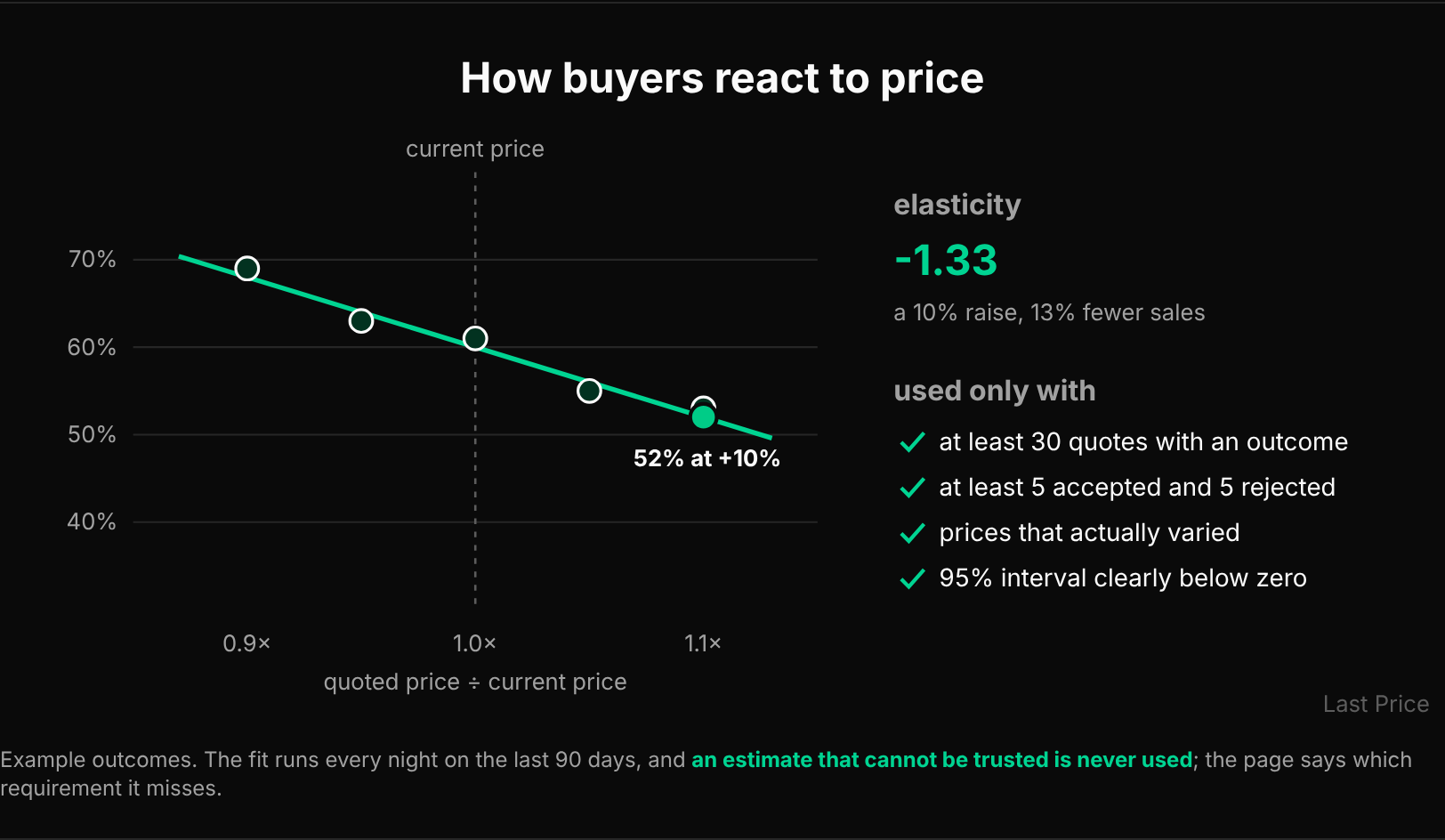
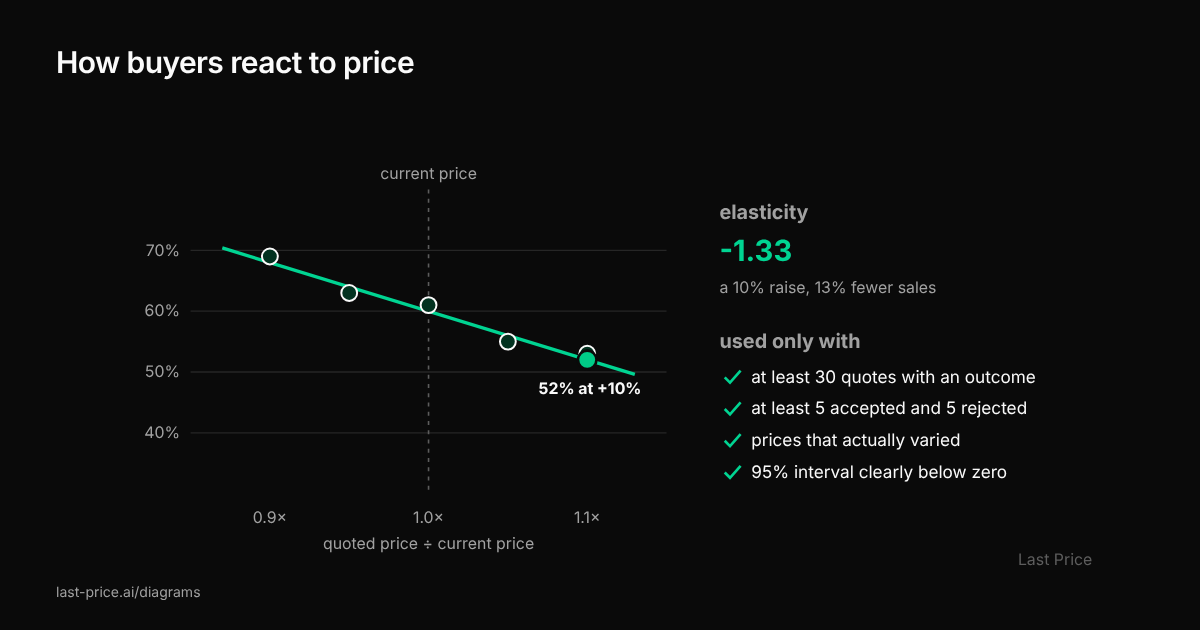
14.How buyers react to price
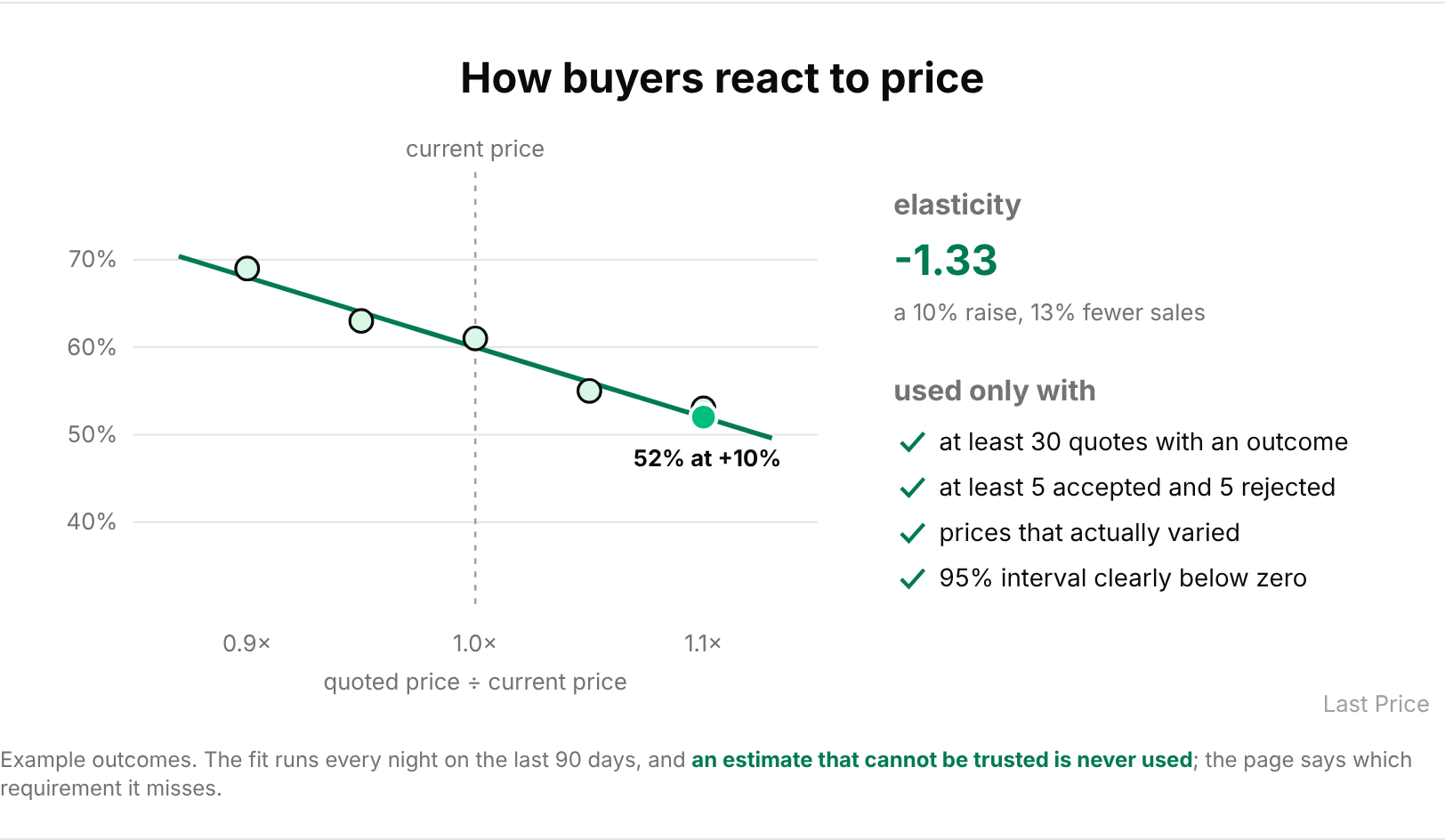
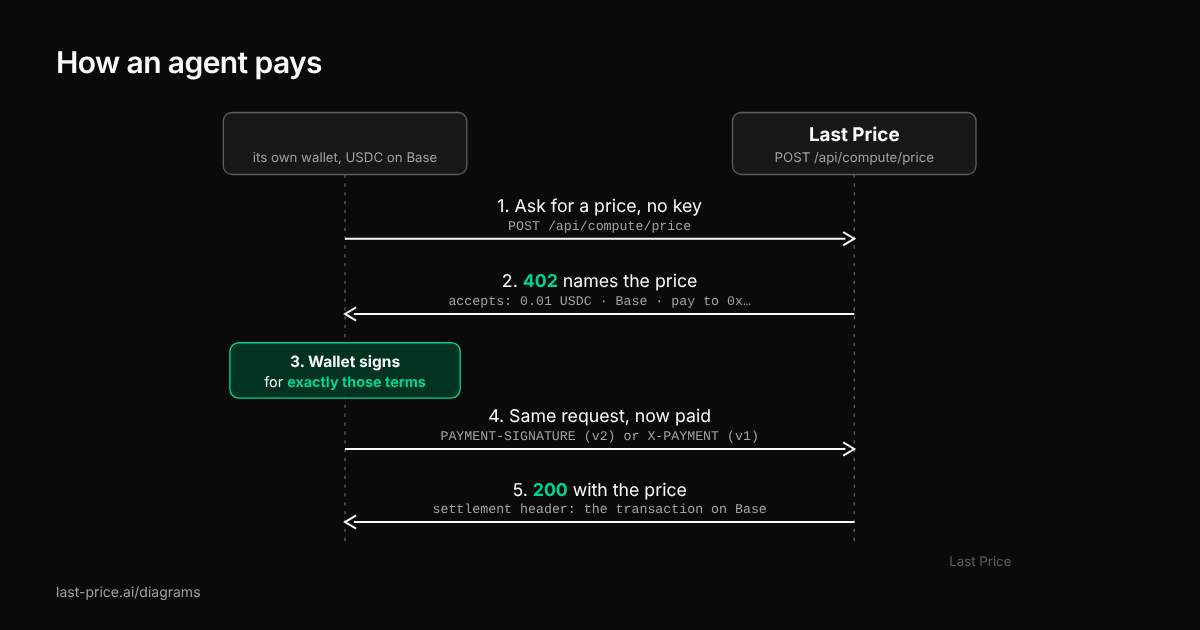
Example outcomes. The fit runs every night on the last 90 days, and an estimate that cannot be trusted is never used; the page says which requirement it misses. 15.How an agent pays
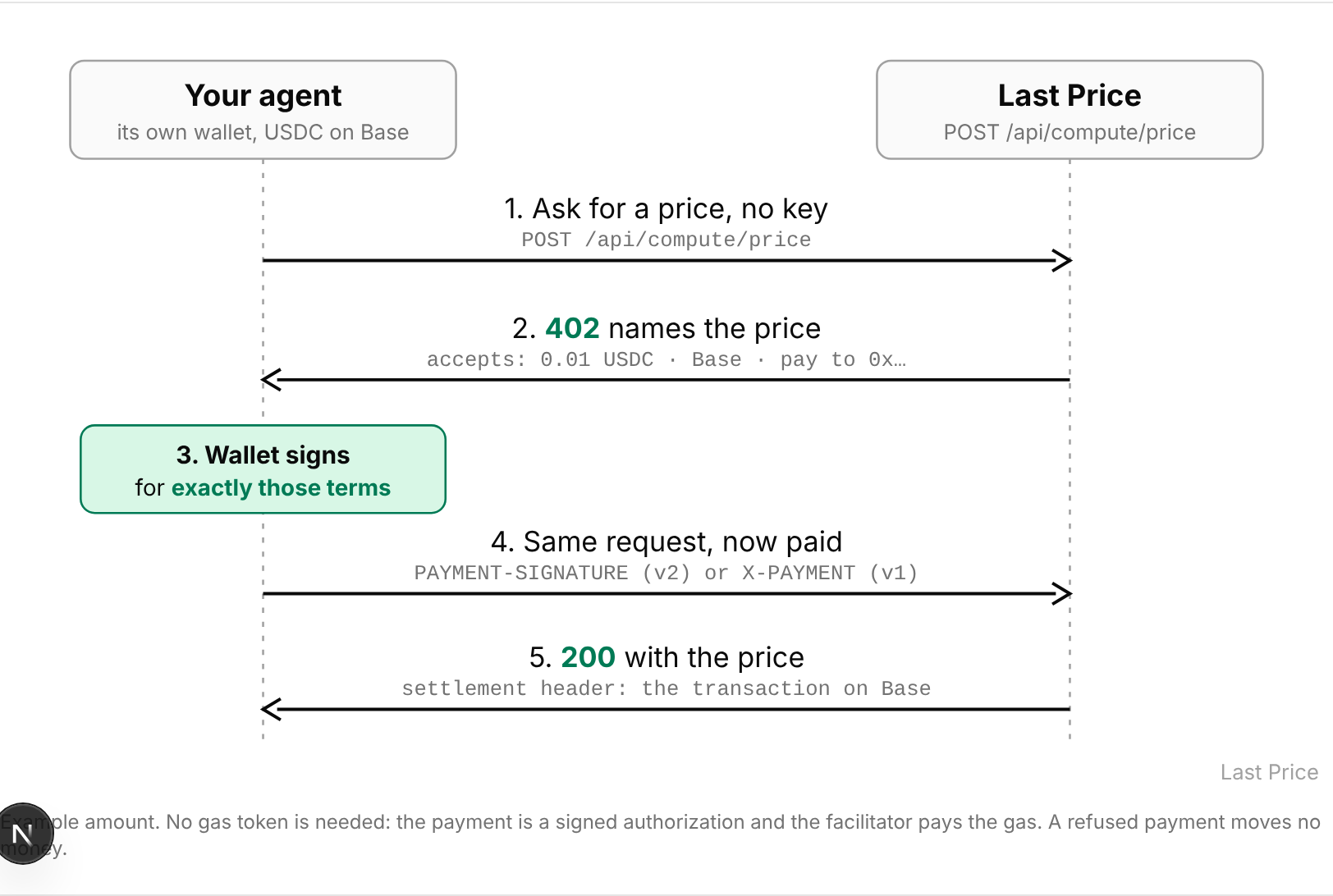
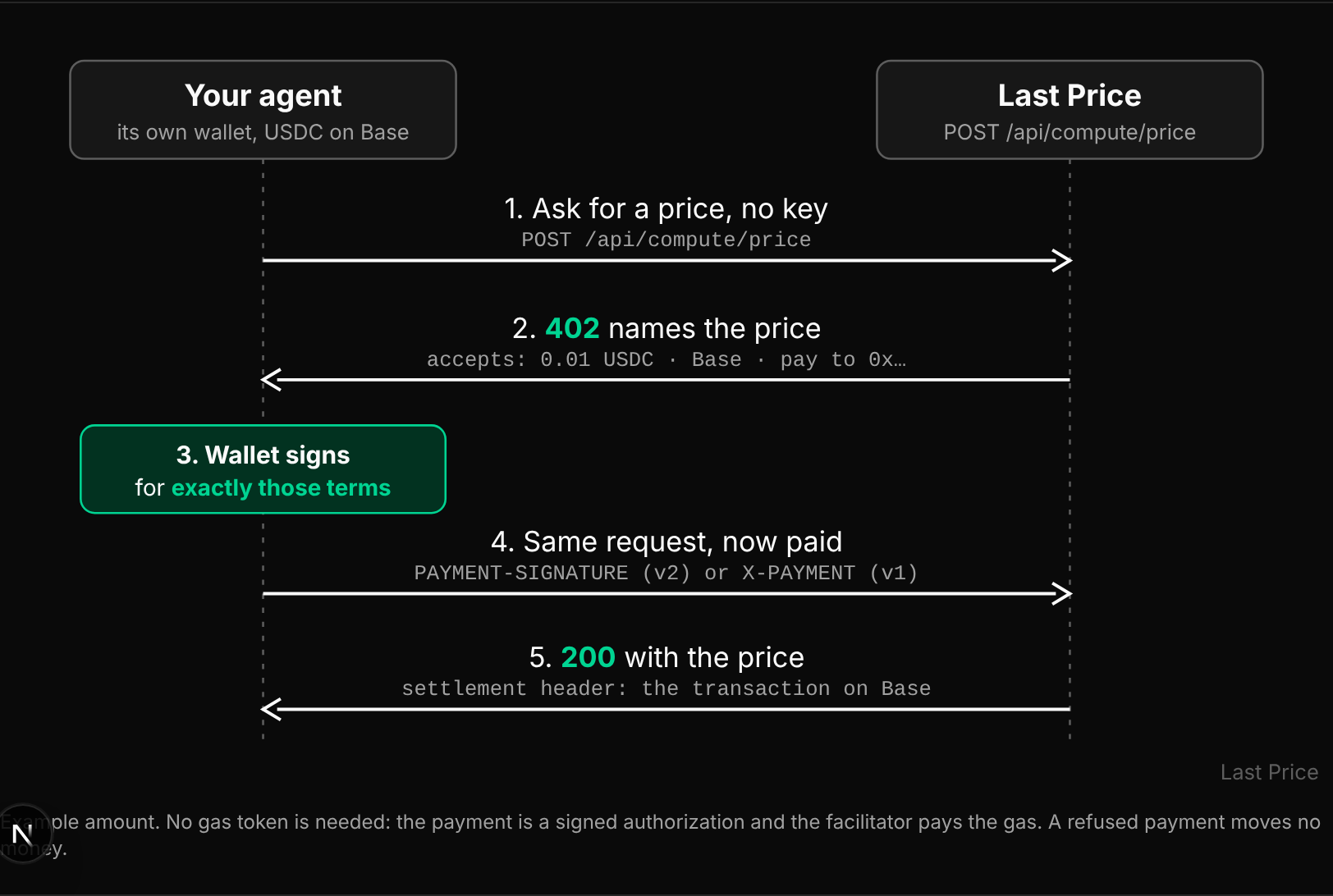
Example amount. No gas token is needed: the payment is a signed authorization and the facilitator pays the gas. A refused payment moves no money.